
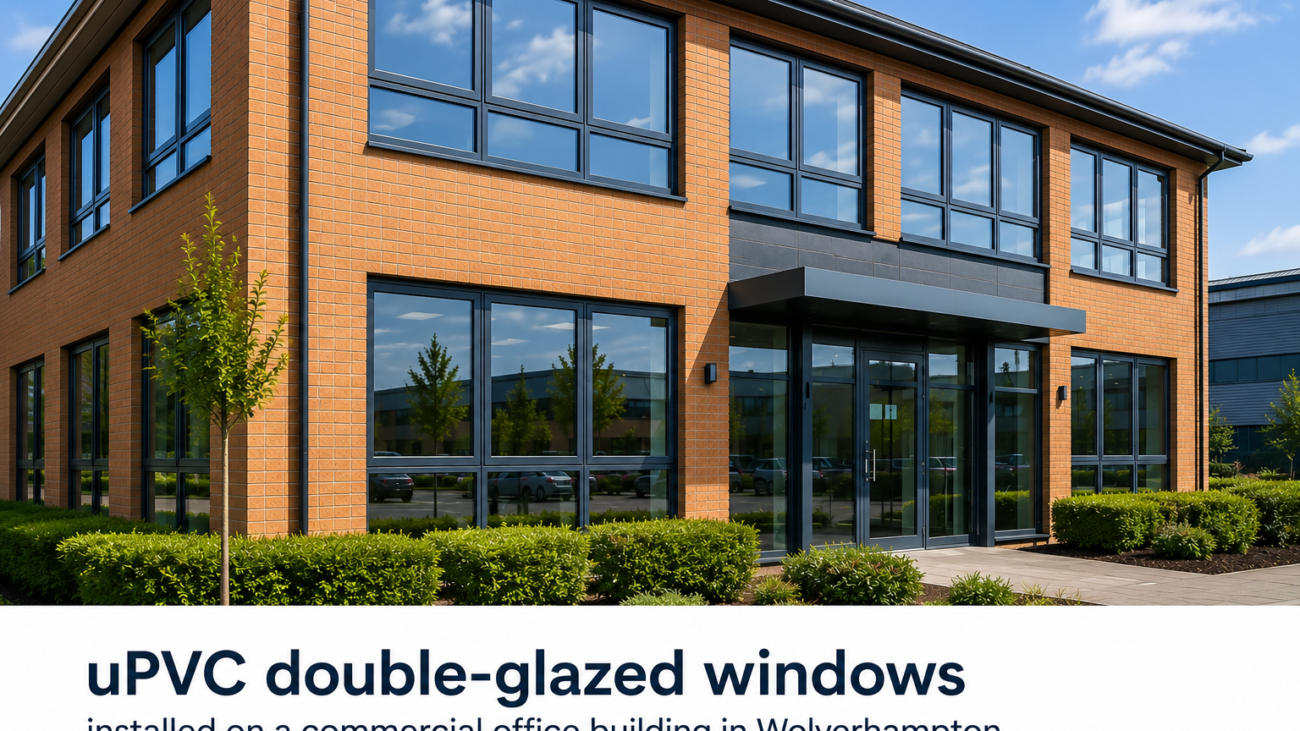
uPVC Doors and Windows: A Complete Guide for UK Commercial Properties
If you manage a commercial building anywhere from Wolverhampton to the wider West Midlands, the frames around your glazing do more work than most people realise. uPVC doors and windows are now one of the most widely specified solutions for UK businesses looking to cut energy bills, improve security, and meet tightening building regulations, without the price tag of aluminium or timber alternatives.
In this guide, we break down what uPVC actually is, how uPVC doors compare to uPVC windows in a commercial setting, and why so many facilities managers, landlords, and business owners across the UK are switching. We’ll also look at real performance figures, so you can make a decision based on data rather than sales talk.
What Is uPVC, and Why Does It Matter for Commercial Buildings?
uPVC (unplasticised polyvinyl chloride) is a rigid, low-maintenance plastic used to manufacture window and door frames. Unlike the softer PVC used in piping, uPVC doesn’t contain plasticisers, which makes it more durable, more weather-resistant, and better suited to the temperature swings a commercial frontage experiences over a UK winter and summer.
For commercial property owners, three factors typically drive the decision to install uPVC:
- Cost control: uPVC remains one of the cheapest frame materials to buy and install compared with aluminium or timber, which matters when you’re glazing an entire office block, retail unit, or warehouse frontage.
- Regulatory pressure: The UK’s Future Homes Standard has pushed maximum window U-values down to 1.2 W/m²K, and commercial refurbishments are increasingly held to similar thermal performance expectations. Multi-chambered, thermally broken uPVC profiles are now the practical way to hit these targets without a full aluminium spec.
- Low maintenance: uPVC doesn’t rot, rust, or need repainting, which reduces the ongoing facilities budget for multi-let or high-footfall commercial sites.
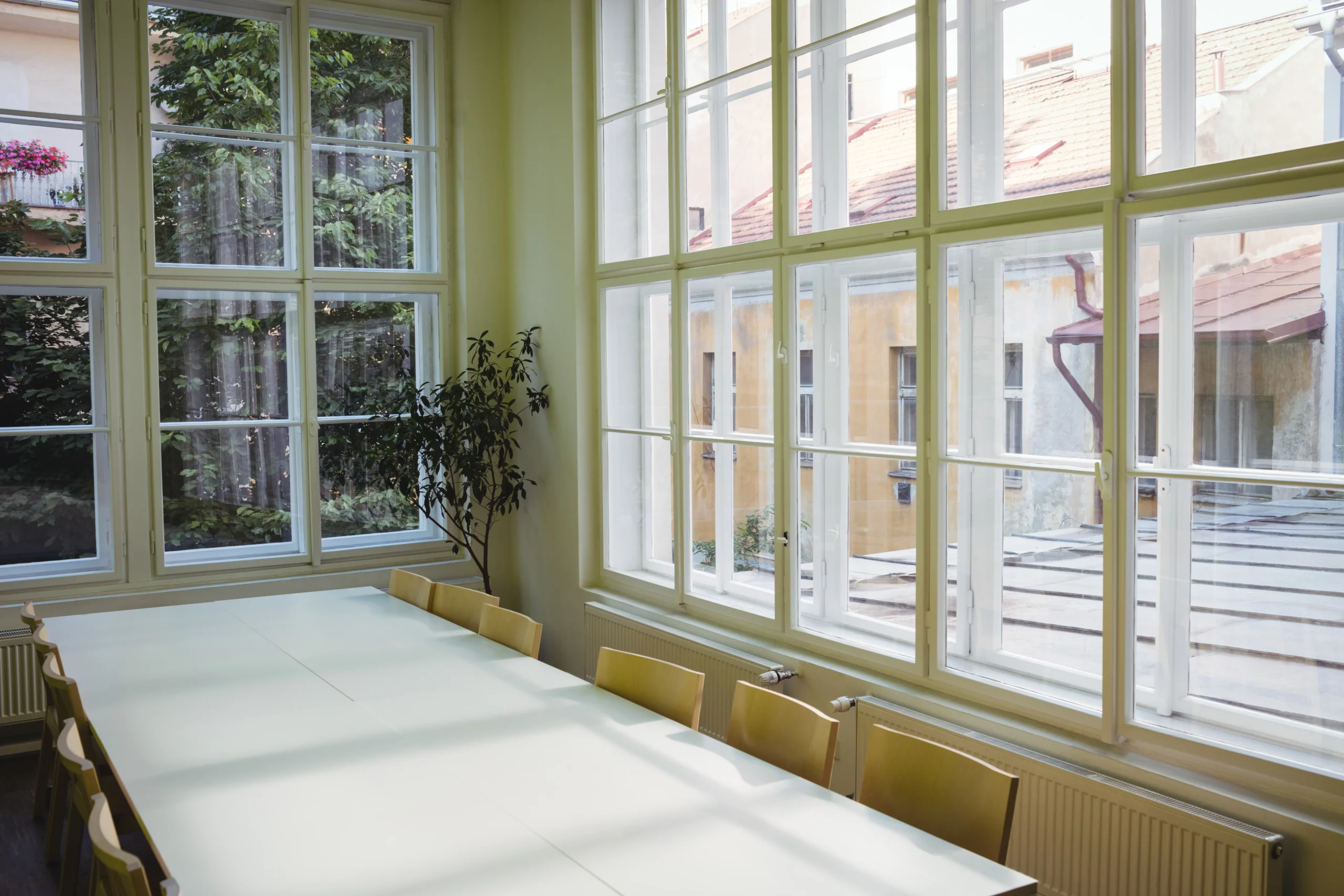
uPVC Windows: Where They Perform Best
uPVC windows are typically the better fit where thermal performance and budget are the primary concerns; think office suites, schools, healthcare buildings, and multi-unit retail parks.
Key performance data:
- Roughly 20% of the heat lost from a typical building escapes through its windows, which is why frame and glazing specs have such an outsized effect on heating costs.
- Modern A++ rated uPVC windows achieve U-values between 0.8 and 1.0 W/m²K, a significant improvement on the ageing single-glazed or early double-glazed units still found in many commercial buildings built before the 2000s.
- uPVC currently holds around a quarter of the volume share of the UK window and door market, largely because it balances upfront cost against long-term energy savings better than most alternatives.
For a commercial landlord, the practical upshot is straightforward: replacing tired window units with A-rated uPVC can materially cut a building’s heating load, which matters both for EPC ratings on commercial leases and for tenant satisfaction in the colder months.
uPVC Doors: Where They Perform Best
uPVC doors are a strong option for secondary entrances, staff doors, fire escapes, and back-of-house access points where security and weather sealing matter more than architectural statement. For a primary commercial entrance, many businesses now pair uPVC windows with a composite or aluminium door, but uPVC still holds a meaningful share of the market thanks to its price point.
Key performance data:
- A well-fitted uPVC door can achieve a U-value of around 1.4 W/m²K, comfortably outperforming a standard timber door, which typically sits between 1.8 and 2.2 W/m²K.
- uPVC doors remain the most budget-friendly option on the market, with installed costs generally starting well below composite or aluminium equivalents, a meaningful factor when you’re specifying multiple doors across a commercial site.
- uPVC currently dominates the UK refurbishment market, driven in large part by building regulations that now require U-values of 1.4 W/m²K or better on replacement projects.
uPVC Doors vs Windows: Side-by-Side Comparison
| Factor | uPVC Windows | uPVC Doors |
| Best use case | Office glazing, shopfronts, multi-unit sites | Staff entrances, fire exits, secondary access |
| Typical U-value | 0.8–1.4 W/m²K (A-A++ rated) | Around 1.4 W/m²K |
| Maintenance | Minimal: no repainting or rot | Minimal: hinges/locks need periodic checks |
| Security rating | PAS 24 available on most ranges | PAS 24 and multi-point locking widely available |
| Typical lifespan | 20–35 years with proper installation | 20–25 years with proper installation |
| Best for | Thermal performance on a budget | Cost-effective, secure secondary access |
Why Installation Quality Matters as Much as the Product
One point commercial buyers often overlook: even a top-spec, A++ rated uPVC window will underperform if it’s poorly fitted. Gaps around the frame, incorrect sealing, and rushed installation can quietly undo the thermal benefits you paid for, leading to draughts, condensation, and higher energy bills despite a “high-performance” product on paper.
This is particularly relevant for commercial projects, where installers are often working around trading hours, multiple units, or occupied office space. A rushed job across twenty window units causes twenty times the problem of a rushed job on a single domestic window. Working with an installer who understands commercial-scale projects, sequencing, access, and minimal disruption to tenants or staff is often the difference between a smooth refurbishment and months of callbacks.
A Real-World Example
Consider a mixed-use commercial block in the Wolverhampton area with twelve retail units below and office space above, still fitted with 1990s double glazing. Upgrading to A-rated uPVC windows across the block, combined with uPVC or composite doors on staff entrances, typically delivers three tangible outcomes for the landlord:
- A measurable drop in shared heating costs across the building, improving the EPC rating ahead of lease renewals.
- Reduced tenant complaints about draughts and cold spots during winter months.
- A lower long-term maintenance bill, since uPVC frames don’t need repainting or treating the way timber does.
None of these benefits show up instantly; they compound over several heating seasons, which is why uPVC is best thought of as a long-term investment in a commercial asset rather than a quick cosmetic fix.
Questions Commercial Buyers Often Ask
Is uPVC secure enough for a commercial building? Yes, when specified correctly. Look for PAS 24 certification and multi-point locking systems, which are widely available across uPVC door and window ranges and are tested against realistic break-in scenarios.
How long does uPVC actually last? With correct installation, uPVC windows and doors typically perform well for 20 to 35 years, though real-world lifespan depends on exposure, footfall, and maintenance.
Is uPVC still worth it compared with aluminium? For most commercial budgets, yes. Aluminium offers slimmer sightlines and a more contemporary look, but at a higher cost. uPVC remains the more economical route to hitting modern U-value targets across a whole building.
Final Thoughts
Choosing between uPVC doors and uPVC windows for a commercial property isn’t really an either/or decision; most well-specified commercial refurbishments use both, matched to where they perform best. Windows carry the bulk of the thermal performance improvement, while doors carry the security and access load. What ties both together is installation quality, which is where the real performance gap between a good refurbishment and a disappointing one tends to appear.
If you’re planning a commercial glazing upgrade in Wolverhampton or the surrounding cities, Design Glaze supplies and installs uPVC doors and windows for commercial clients across the UK, backed by over 5 years of experience delivering projects with minimal disruption to trading businesses. Get in touch for a site assessment and a no-obligation quote.