Door Lock Installation & Upgrades for Commercial Premises

Door Lock Installation & Upgrades for Commercial Premises

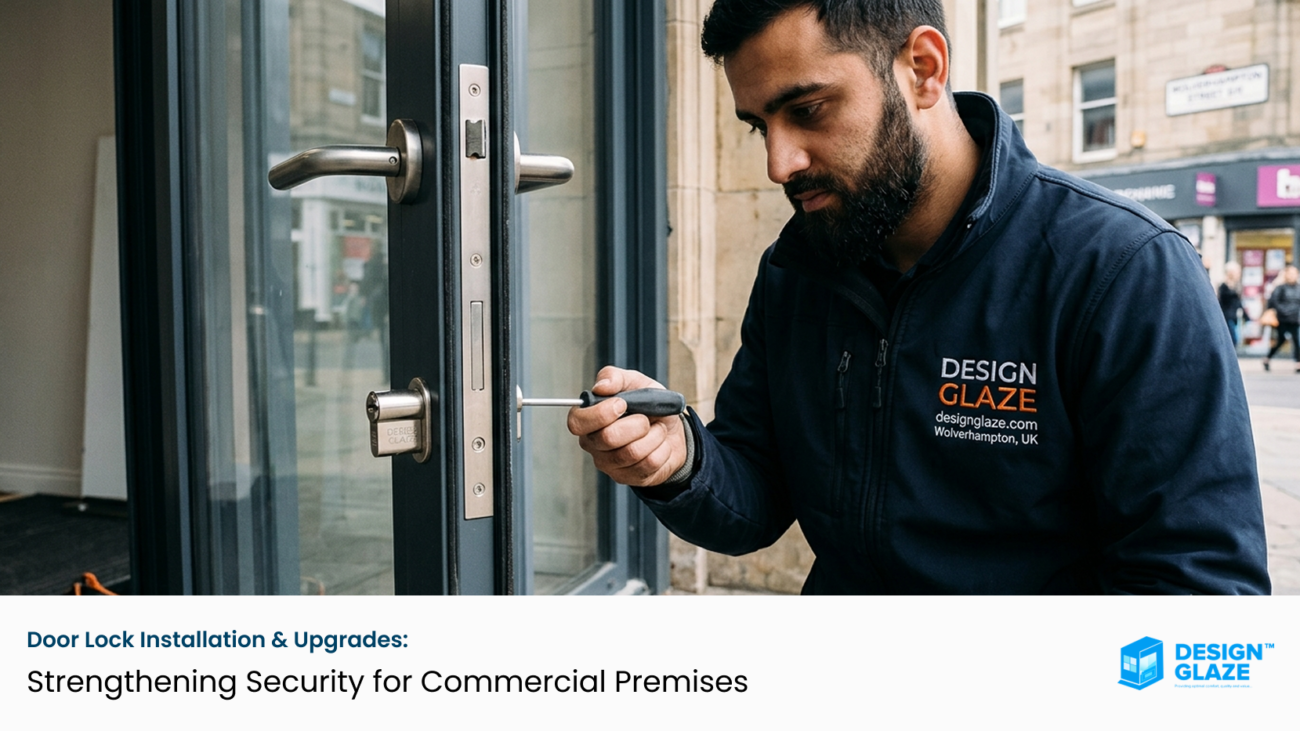
Door Lock Installation & Upgrades: Strengthening Security for Commercial Premises

Around 8% of UK business premises experience burglary or an attempted burglary each year, and ground-floor doors remain the most common point of entry. For most commercial properties, the door lock is doing more heavy lifting than any other single piece of security equipment on site, yet it’s often the last thing to get upgraded. This guide covers what modern door lock installation looks like for commercial premises in 2026, which standards actually matter, and what to prioritise if you’re planning an upgrade.

Why Door Lock Installation Deserves More Attention Than It Gets

Alarms, CCTV, and lighting tend to dominate the security conversation, but they’re all reactive, alerting someone to a problem that’s already underway. A strong lock is the first line of defence, preventing an intruder from getting in at all and making every other security measure far more effective as a result. When locks are worn, outdated, or poorly installed, even a high-specification door becomes a genuine vulnerability.

Modern break-ins rarely resemble anything dramatic. Most are quick, opportunistic, and focused on exploiting whatever weak point is easiest to find, which is exactly why outdated hardware, particularly locks fitted more than a decade ago, is such a common target. Techniques like snapping, drilling, and lock manipulation are well understood by opportunistic offenders, and older cylinders simply weren’t built to resist them.

Standards to Know Before Any Door Lock Installation

BS3621

BS3621 is the British Standard for thief-resistant locks and is frequently required by insurers as a minimum condition for commercial cover. Locks certified to this standard are tested against common attack methods including drilling, picking, and forced entry, and failing to meet it can put an insurance claim at risk following a break-in.

TS007 3-Star Rated Cylinders

The TS007 kitemark rates euro cylinder locks on a star system, with 3-star cylinders offering the strongest protection against snapping, one of the most common modern attack methods on standard door locks. A 1-star cylinder paired with 2-star hardware achieves the same overall rating, but a genuine 3-star cylinder is generally the simplest, most reliable upgrade for commercial premises.

Sold Secure and Secured by Design

Sold Secure testing (Bronze, Silver, Gold, and Diamond) independently verifies lock performance against forced entry, while Secured by Design is a police-backed accreditation scheme recognising products that meet a higher security standard. Both are useful reference points when comparing locking hardware for a commercial installation.

PAS 24 for the Full Doorset

While the standards above relate to the lock itself, PAS 24 certifies the performance of the complete doorset, door, frame, and locking system together, which matters because a strong lock fitted into a weak door or frame still leaves a genuine vulnerability.

What Modern Door Lock Installation Involves

1. Assessing the Existing Setup

A proper door lock installation starts with assessing what’s already fitted, the age and type of cylinder, the condition of the door and frame, and whether the current hardware meets current insurance requirements. This step alone often reveals vulnerabilities a business wasn’t aware of.

2. Specifying the Right Locking System

For most commercial entrances, a multi-point locking system paired with a TS007 3-star rated cylinder offers a strong, proportionate level of security. Higher-risk premises, those holding cash, high-value stock, or sensitive equipment, may warrant additional measures such as LPS 1175 rated hardware or access control integration.

3. Fitting and Testing

Installation includes fitting the new cylinder or locking mechanism, checking alignment with the strike plate and frame, and testing every locking point to confirm smooth operation. Poor alignment is a common cause of premature lock failure, so this step matters as much as the hardware itself.

4. Documentation for Insurance and Compliance

For commercial premises, keeping documentation of the certification and installation date is worth doing from the outset, since insurers frequently ask for evidence that locks meet the required standard at the time of any claim.

Signs Your Commercial Premises Needs a Lock Upgrade
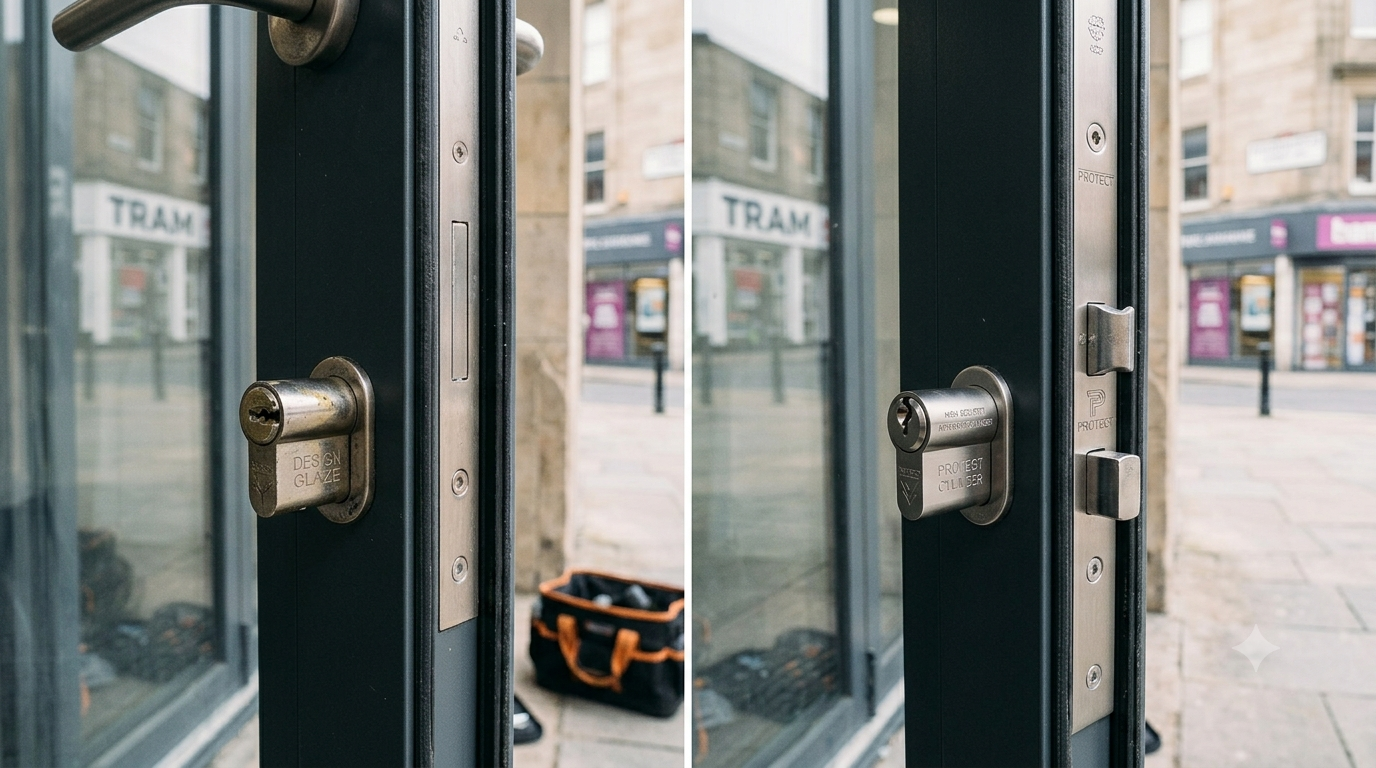
Old versus upgraded commercial door lock security comparison

  • The locks are more than 10 years old. Older hardware often predates current attack methods and may no longer meet insurance requirements.
  • You don’t know the certification of your current locks. If nobody on site can confirm whether the locks meet BS3621 or TS007 3-star, that’s worth checking before it becomes a problem.
  • Keys have been lost or staff turnover has been high. Every lost key or departing employee is a potential access point that hasn’t been closed off.
  • The premises has been targeted before. Odds of a repeat break-in rise noticeably if security wasn’t meaningfully upgraded after a previous incident.
  • You’re renewing insurance or a lease. Both are common trigger points where lock specification gets checked, making it a sensible time to upgrade proactively rather than reactively.

Choosing Between Standard and Access-Controlled Locking

FactorStandard Mechanical LocksAccess Control Systems
Best forSmall to medium commercial premisesMulti-user or high-footfall sites
Upfront costLowerHigher
Key managementPhysical keys, harder to trackFob, code, or app-based, easy to audit
Lost key riskRequires rekeying or lock changeSimply deactivate the credential
IntegrationStandaloneCan integrate with alarms and CCTV

For many commercial premises, a well-specified mechanical lock is entirely sufficient. Access control becomes more worthwhile once a site has multiple staff, frequent turnover, or several access points to manage centrally.

A Practical Example

A retail unit in the Wolverhampton area, previously fitted with a standard euro cylinder lock more than a decade old, upgraded to a TS007 3-star rated multi-point locking system following a routine insurance review that flagged the existing hardware as non-compliant. Beyond satisfying the insurer’s requirements, the upgrade closed a genuine vulnerability that had gone unnoticed for years, giving the business a documented, certified locking specification it could point to with confidence at the next renewal.

Frequently Asked Questions

How often should commercial door locks be upgraded? There’s no fixed rule, but locks older than 10 years, or those without confirmed certification, are worth reviewing. Insurance renewal and lease changes are also natural checkpoints to reassess lock specification.

Is a TS007 3-star cylinder enough for a commercial premises? For most standard commercial entrances, yes. Higher-risk premises holding cash or high-value stock may warrant additional measures such as LPS 1175 rated hardware or access control.

Does door lock installation affect building insurance? It can. Many commercial insurance policies specify a minimum lock standard, commonly BS3621 or an equivalent, and failing to meet it can affect a claim following a break-in.

Final Thoughts

Door lock installation is one of the most cost-effective security upgrades a commercial premises can make, closing off the single most common point of entry for opportunistic break-ins. Whether it’s a straightforward cylinder upgrade or a full multi-point locking and access control specification, matching the hardware to the actual risk level is what makes the investment worthwhile.

Design Glaze carries out door lock installation and security upgrades for commercial clients across Wolverhampton and neighbouring cities, with over 5 years of experience matching security specification to real business risk. Get in touch for a site assessment and a no-obligation quote.
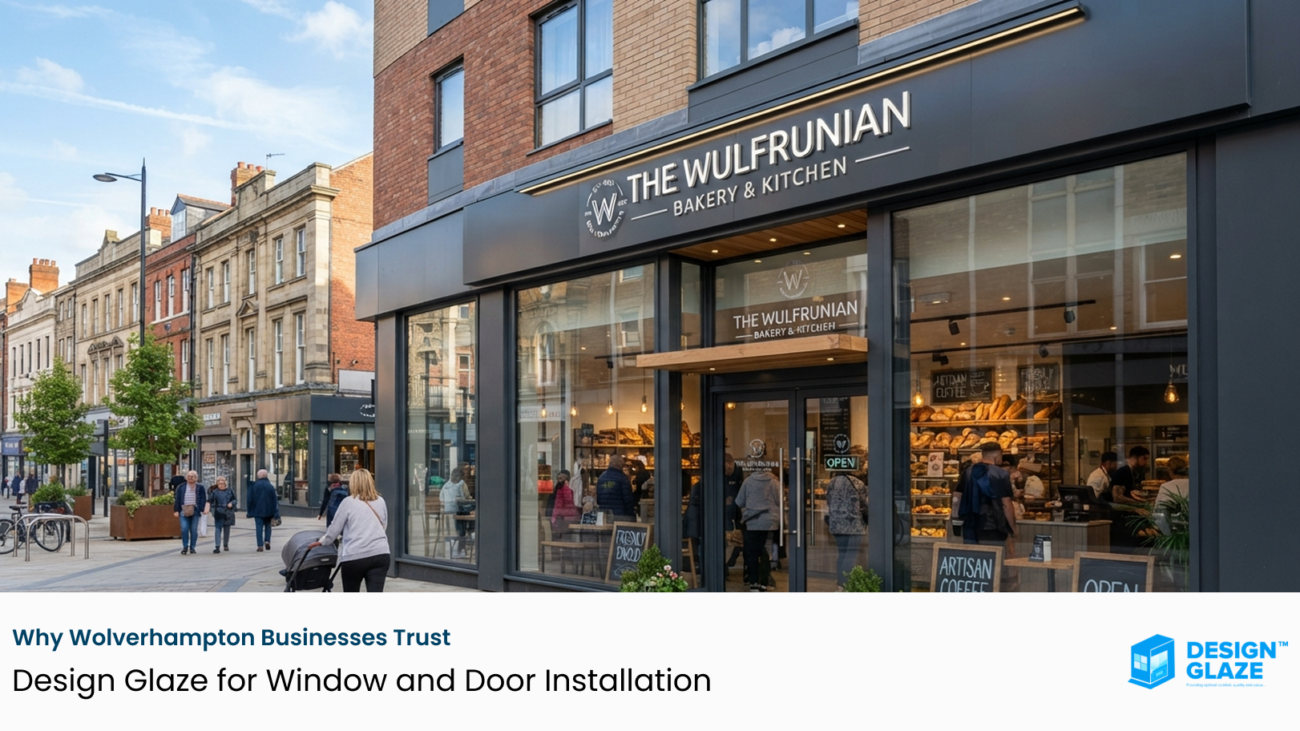
Window and Door Installation in Wolverhampton: Why Design Glaze? - Why Wolverhampton Businesses Trust Design Glaze for Window and Door Installation

Window and Door Installation in Wolverhampton: Why Design Glaze?

Why Wolverhampton Businesses Trust Design Glaze for Window and Door Installation

Wolverhampton is in the middle of one of its biggest transformations in decades, with over £4.4 billion in investment either on-site or in the delivery pipeline across the city. From the £150 million City Learning Quarter to the continued growth of the i54 enterprise zone on the M54 and M6 corridor, businesses across the city are investing in premises that need to look and perform to a modern standard. Reliable window and door installation in Wolverhampton has become a genuine priority for the businesses driving that growth, not an afterthought.

Design Glaze has spent over 5 years supplying and installing windows and doors for commercial clients across Wolverhampton and its neighbouring cities. Here’s why local businesses keep coming back to us.

Wolverhampton’s Commercial Landscape Is Changing Fast

Wolverhampton currently ranks as the third-largest commercial property market in the West Midlands, behind only Birmingham and Coventry, with HM Land Registry recording well over a thousand commercial-leaning property transactions across the city in the past five years. The city’s role as a manufacturing and logistics hub, anchored by major employers along the i54 corridor, continues to support steady demand for industrial and owner-occupier commercial premises.

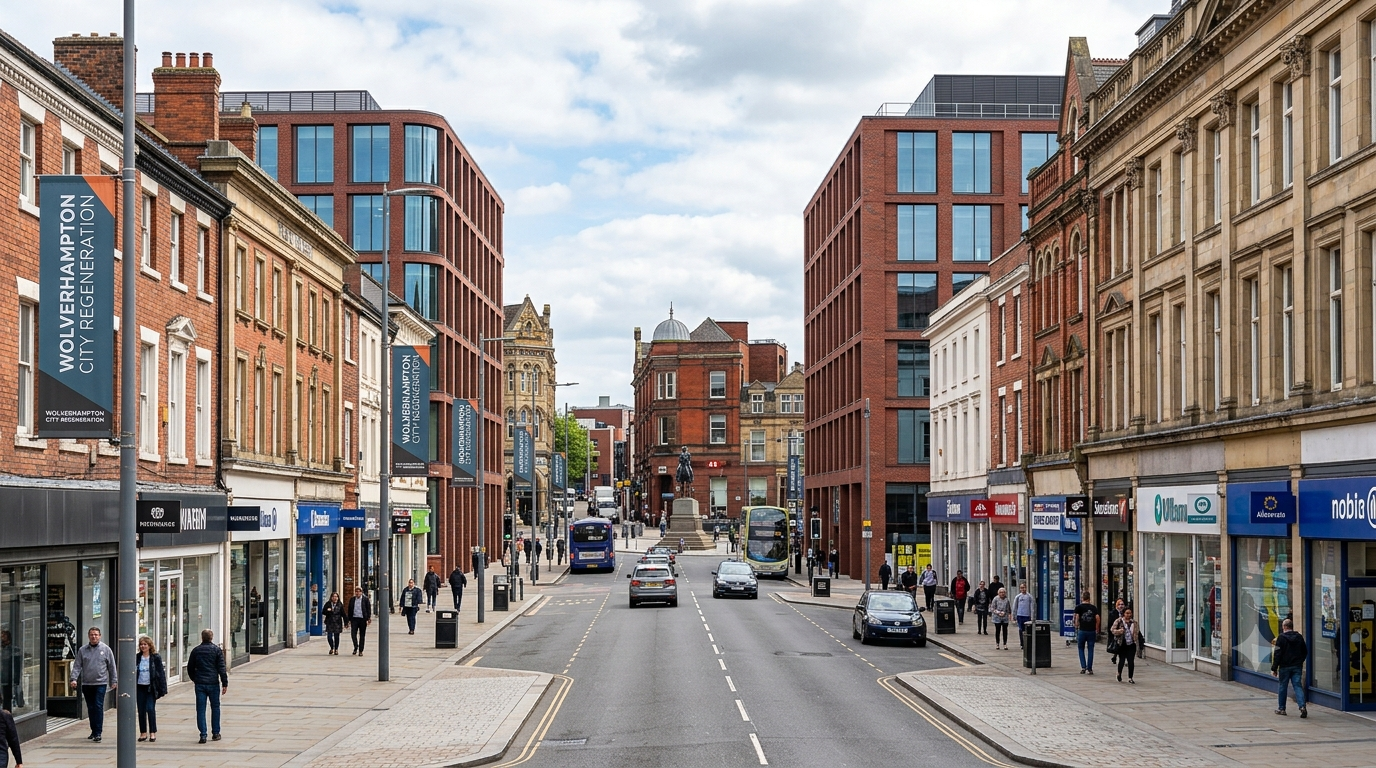
Wolverhampton city centre showing commercial regeneration development

At the same time, city centre regeneration projects are reshaping how Wolverhampton looks and functions, from large-scale mixed-use developments to the conversion of long-vacant retail buildings into new commercial and residential space. For businesses operating or investing in this environment, glazing that performs well and presents professionally isn’t optional, it’s part of staying competitive in a city actively reinventing itself.

What Sets Design Glaze Apart for Commercial Window and Door Installation in Wolverhampton

1. Genuine Commercial Experience, Not Just Domestic Know-How

Commercial projects come with different demands to a domestic job, larger openings, tighter security requirements, and installation that has to work around live trading hours. Design Glaze has built its experience specifically around commercial clients, understanding the sequencing, access, and compliance considerations that a purely residential installer often hasn’t encountered.

2. Local Knowledge That Actually Matters

Working across Wolverhampton and its neighbouring cities for over 5 years means understanding the practical realities of the area’s buildings, from older commercial stock in need of sympathetic upgrades to new-build units going up as part of the city’s regeneration pipeline. That local knowledge shapes everything from realistic timelines to sensible material recommendations for the local climate and building types.

3. A Full Range of Commercial Glazing Solutions

Rather than specialising in a single product, Design Glaze supplies and installs the full range of window and door installation in Wolverhampton businesses actually need, uPVC and aluminium windows, bifolding and sliding glass doors, security steel doors, and warehouse-grade roller shutters, all from a single, accountable supplier.

4. Installation Planned Around Your Business, Not the Other Way Around

Commercial premises can’t simply close for a day while work takes place. Design Glaze plans installation around trading hours, staged access, and out-of-hours scheduling where needed, so glazing upgrades don’t come at the cost of lost trading time.

5. Compliance and Certification Businesses Can Rely On

From PAS 24 certified security doors to FENSA-compliant thermal upgrades, commercial clients need documented compliance for insurance, lease renewals, and Building Regulations. Design Glaze builds this into every project rather than treating it as an afterthought.

Serving Wolverhampton and Its Neighbouring Cities

While Wolverhampton is at the heart of our work, Design Glaze supplies and installs windows and doors for commercial clients across the wider region and, for larger contracts, across the UK. Whether it’s a retail unit in the city centre, an office block near the regeneration zones, or an industrial unit along the i54 corridor, the same standard of commercial-grade installation applies wherever the project is based.

What Commercial Clients Can Expect Working With Design Glaze

  1. A proper site survey before any quote is finalised, so budgets reflect the real condition of the opening rather than guesswork.
  2. Clear, realistic timelines that account for structural work, certification, and scheduling around your operating hours.
  3. Certified, compliant installation, with documentation provided for insurance, lease, and Building Regulations purposes.
  4. A single point of contact throughout the project, rather than being passed between multiple subcontractors.
  5. Ongoing support after installation, for maintenance, servicing, or future upgrades as your business or premises change.

A Practical Example

A retail unit in Wolverhampton city centre, part of the wave of businesses moving into newly regenerated ground-floor space, needed a full glazing package completed before opening day: a modern aluminium shopfront, a PAS 24 certified rear staff entrance, and a secure roller shutter for the stockroom. Working to a fixed opening date, the project was sequenced so structural and glazing work happened ahead of the fit-out, with certification issued in time for the lease inspection, allowing the business to open on schedule without a single delay traced back to the glazing package.

Frequently Asked Questions

Does Design Glaze only work in Wolverhampton itself? No. While Wolverhampton is central to our work, we serve commercial clients across the city’s neighbouring cities and, for larger projects, across the UK.

Can installation be scheduled around our trading hours? Yes. Commercial installation is planned around your business, including staged access and out-of-hours work where it’s needed to avoid disrupting trading.

What types of commercial glazing does Design Glaze install? Everything from uPVC and aluminium windows and doors to bifolding and sliding glass doors, security steel doors, and warehouse-grade roller shutters and garage doors.

Final Thoughts

Wolverhampton’s commercial landscape is changing quickly, and the businesses investing in it need glazing partners who understand what that actually requires: certified, reliable window and door installation in Wolverhampton, delivered around real trading hours by people who know the city.

Design Glaze has supplied and installed windows and doors for commercial clients across Wolverhampton and neighbouring cities for over 5 years. Get in touch for a site assessment and a no-obligation quote.
Garage Door Installation for Warehouses and Commercial Units

Garage Door Installation for Warehouses: Buyer’s Guide

Garage Door Installation for Warehouses and Commercial Units: A Buyer’s Guide

Garage door installation for a warehouse or commercial unit is a different job entirely to fitting a domestic up-and-over door. The openings are larger, the doors are opened far more often, and security, insulation, and fire compliance all carry more weight when the space behind the door holds stock, machinery, or an entire operation. This guide walks through the main door types available for warehouses and commercial units, what they cost in 2026, and what to check before choosing an installer.

Why Commercial Garage Door Installation Needs a Different Approach

A domestic garage door typically opens a handful of times a day. A warehouse or commercial unit door might open dozens of times for deliveries, staff access, or vehicle movement, which changes what a business actually needs from the door:

  • Higher-cycle hardware. Doors built for domestic use aren’t designed for the constant opening and closing a busy loading bay demands.
  • Larger, non-standard openings. Warehouses and industrial units often need bespoke sizing well beyond standard domestic dimensions.
  • Insulation and climate control. Temperature-sensitive stock, whether that’s food, pharmaceuticals, or electronics, often requires insulated doors to maintain consistent internal conditions.
  • Fire compliance. Larger commercial and industrial buildings frequently need fire-rated shutters as part of a compartmentation strategy, which isn’t a consideration for most domestic garages.

Types of Doors for Warehouses and Commercial Units

Roller Shutter Doors

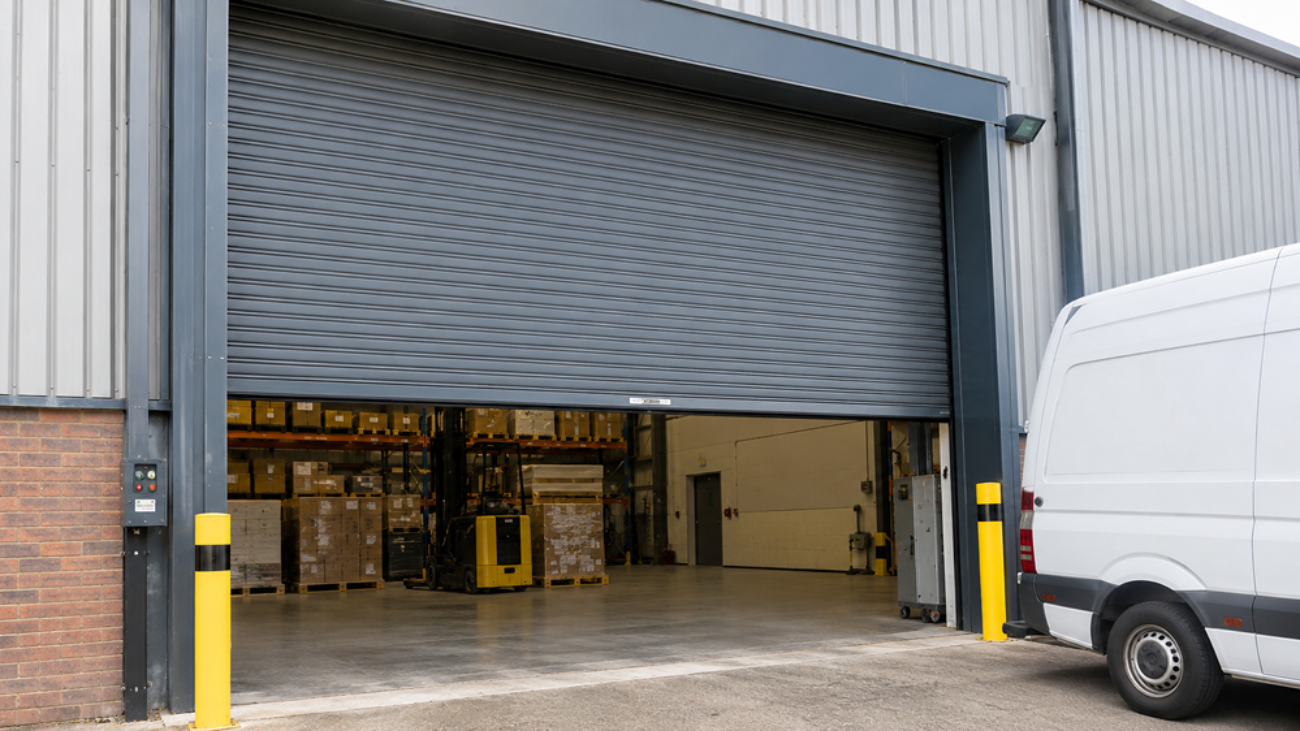
Roller shutter doors remain one of the most popular choices for warehouses and logistics units, rolling vertically into a compact housing above the opening. Built from interlocked steel slats, they offer strong security and can handle high-frequency daily use without the wear a lighter-duty door would suffer.

Best for: Loading bays, distribution centres, and any opening needing frequent access alongside solid security.

Sectional Overhead Doors

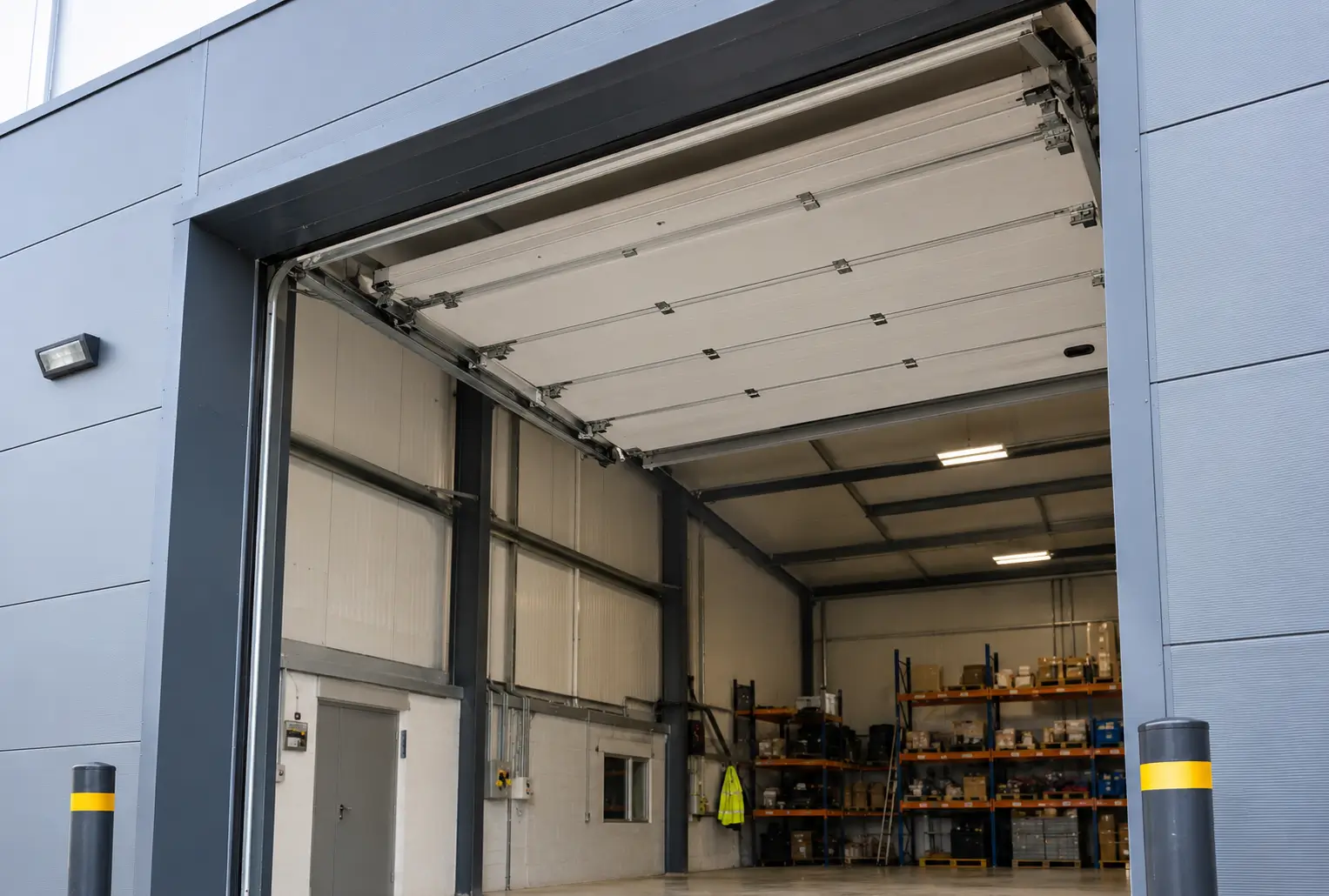
Sectional doors open in horizontal panels that lift vertically and stack under the ceiling, maximising usable floor and wall space compared with a swinging or sliding alternative. They typically offer the best insulation of the standard commercial door types, making them a strong choice where thermal performance matters.

Best for: Insulated storage, temperature-sensitive units, and premises where floor space around the opening is limited.

Sectional overhead door installed on a commercial unit

Roller Shutters with a Wicket Door

A wicket door is a small pedestrian access point built directly into a larger roller shutter, allowing staff to pass through without opening the full shutter for every entry. This improves both security and energy efficiency by reducing how often the main opening is used for foot traffic alone.

Best for: Warehouses and commercial units where staff need frequent pedestrian access separate from vehicle or delivery access.

Fire-Rated Shutters

For larger commercial and industrial buildings, fire-rated shutters form part of a building’s fire compartmentation strategy, automatically closing to contain fire and smoke spread between sections of a building. Specification is typically tested against BS 8524-1, the recognised UK standard for fire and smoke curtain compliance.

Best for: Large warehouses, multi-unit industrial sites, and any building where fire compartmentation is a Building Regulations requirement.

High-Speed Doors

Designed for openings that need to cycle rapidly throughout the day, high-speed doors suit environments with constant vehicle or forklift movement, reducing heat loss and improving workflow efficiency compared with a standard-speed roller shutter.

Best for: High-throughput logistics operations and internal openings between temperature-controlled zones.

What Garage Door Installation Costs for Warehouses and Commercial Units (2026)

Door TypeTypical Cost Range (Supplied & Fitted)Notes
Commercial roller shutter (light-duty)From around £500Suits lighter-use commercial applications
Galvanised steel industrial roller shutter£2,500 to £6,000+Scales with size, automation, and insulation
Sectional overhead door (4m x 4m opening)From around £2,735Best insulation of the standard options
Roller shutter with wicket door£1,500 to £5,000Custom or insulated options cost more
Fire-rated shutterPriced per projectDepends on fire rating, size, and BS 8524-1 compliance requirements

A few points worth factoring into a warehouse or commercial unit budget:

  • Automation adds cost but pays back in daily use. Electric operation is standard on most commercial roller and sectional doors, and the labour saved on high-frequency openings usually justifies the upfront cost.
  • Size drives price more than almost anything else. Bespoke, non-standard openings, common in warehouses, cost more than a standard-sized commercial unit door.
  • Insulation is not optional for temperature-sensitive stock. Cold storage and climate-controlled units should budget for insulated doors from the outset rather than retrofitting later.
  • Annual servicing is expected, not optional. Industrial doors are typically recommended for servicing at least once a year to maintain safety and warranty compliance under regular commercial use.

What to Check Before Choosing an Installer

Confirm the Door Is Rated for Commercial Cycle Frequency

Ask specifically how many opening cycles the door and its hardware are rated for. A door specified for occasional domestic use will fail quickly under warehouse-level daily traffic.

Check Fire Compliance Requirements Early

If your building needs fire compartmentation, this affects which doors are suitable from the outset. Confirm BS 8524-1 compliance requirements with your installer before finalising a specification, since retrofitting fire-rated shutters later is far more disruptive than planning for them upfront.

Ask About Insulation Values

For temperature-sensitive premises, ask for the specific insulation rating of the door, not just a general claim that it’s “insulated.” This matters for energy costs and for maintaining consistent conditions for stock.

Prioritise an Experienced Commercial Installer

Warehouse and commercial garage door installation involves larger openings, heavier doors, and often structural coordination that a domestic-focused installer may not be set up to handle. Look for an installer with a track record on commercial and industrial projects specifically.

Plan for Minimal Operational Disruption

For an active warehouse or distribution unit, installation needs to be sequenced around live operations. Ask how the installer plans to manage access during the work, particularly if the opening being replaced is in daily use for deliveries.

A Practical Example

A distribution unit in the Wolverhampton area replacing an ageing manual roller shutter opted for an insulated electric roller shutter with a wicket door, allowing staff pedestrian access without opening the full shutter for every arrival. The upgrade delivered three practical results: faster daily operation thanks to electric automation replacing manual winding, reduced heat loss through the loading bay thanks to insulated slats, and improved day-to-day security, since staff no longer needed to open the full shutter simply to walk in and out during a shift.

Frequently Asked Questions

How long does garage door installation take for a warehouse or commercial unit? It depends heavily on size and complexity. A standard commercial roller shutter can often be installed within a day, while larger, bespoke, or fire-rated systems typically take longer and may require a phased installation around operational hours.

Do warehouses need fire-rated garage doors? Not always, but larger buildings often require fire-rated shutters as part of their fire compartmentation strategy under Building Regulations. It’s worth confirming this requirement with a building control advisor early in the planning process.

What’s the difference between a roller shutter and a sectional door for commercial use? Roller shutters roll into a compact housing above the opening and are widely used for security and high-frequency access, while sectional doors lift in panels and generally offer better insulation, making them a stronger choice for temperature-sensitive storage.

Final Thoughts

Garage door installation for a warehouse or commercial unit needs to be planned around how the opening will actually be used, not just its size. Cycle frequency, insulation, and fire compliance all shape which door type makes sense, and getting the specification right from the start avoids a costly retrofit further down the line.

Design Glaze supplies and installs garage doors for warehouses and commercial units across Wolverhampton and neighbouring cities, with over 5 years of experience matching door specification to how a business actually operates. Get in touch for a site assessment and a no-obligation quote.
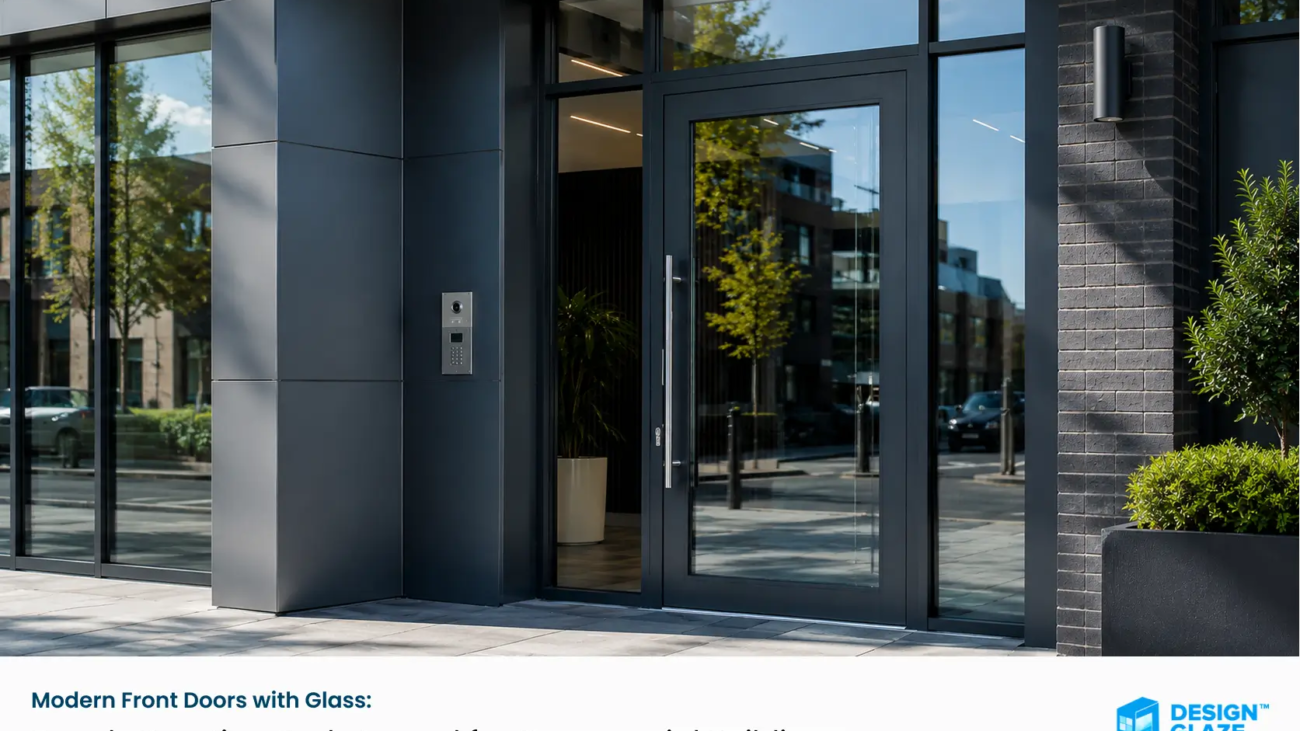
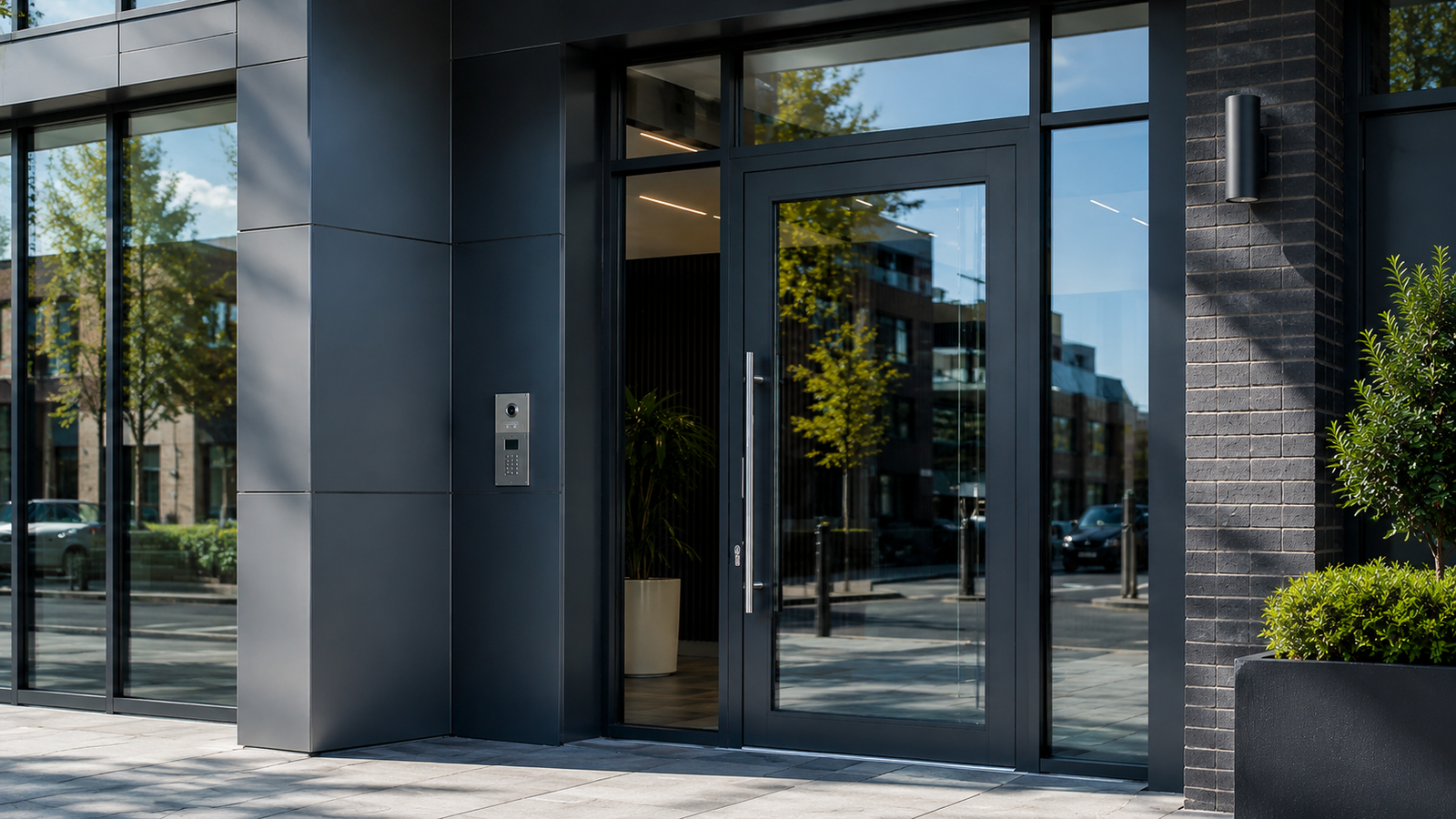
Modern Front Doors with Glass_ Commercial Curb Appeal

Modern Front Doors with Glass: Trends Boosting Curb Appeal for Commercial Buildings

Modern Front Doors with Glass: Trends Boosting Curb Appeal for Commercial Buildings

First impressions happen at the door, and in 2026, that door is increasingly made of glass. Modern front doors with glass have moved from a design nicety to a genuine competitive advantage for commercial buildings, whether that’s an office reception, a retail unit, or a hospitality venue trying to stand out on a busy UK high street.

This guide looks at the trends currently shaping commercial front door design, why glass has become such a dominant feature, and what to think about before specifying a new entrance for your building.

Modern Front Doors with Glass Trends Boosting Curb Appeal for Commercial Buildings

Why Glass Has Become the Default for Commercial Entrances

For decades, a solid, imposing front door signalled security and permanence. That thinking has shifted. Businesses now use glazed entrances to project transparency, accessibility, and confidence, three qualities that matter to both customers walking past and staff arriving each morning.

A few forces are driving the shift specifically in 2026:

  • Natural light expectations. Occupiers increasingly expect daylight to reach reception areas and ground-floor spaces, not just upper floors, which has pushed glazing further into entrance design.
  • Sustainability pressure. Businesses are under growing pressure to demonstrate energy-conscious choices, and modern glazed doors now deliver far better thermal performance than the glazing of even ten years ago, closing the gap between “looks good” and “performs well”.
  • Personalisation. Just as homeowners are moving away from generic front doors toward bespoke colours and decorative glazing, commercial occupiers are doing the same with entrances, using glass detailing to reinforce brand identity rather than defaulting to a plain frame.
  • Indoor-outdoor connection. The trend toward blending indoor and outdoor space, well established in hospitality and retail design, is increasingly reaching office and mixed-use developments too.

Trends Shaping Glazed Commercial Entrances in 2026

1. Bold, Branded Colour Frames

Anthracite grey remains the dominant frame colour for modern commercial glazing, prized for its sleek look and low-maintenance finish that hides marks well against high footfall. Increasingly, businesses are pairing anthracite or graphite frames with a bolder accent colour on the door furniture or surround to reinforce brand identity at street level.

2. Decorative and Textured Glass

Plain flat glazing is giving way to subtle decorative and etched glass patterns, offering privacy or visual interest without sacrificing light. For commercial entrances where full transparency isn’t appropriate, obscure or frosted glazing provides a practical middle ground, particularly for ground-floor offices overlooked by neighbouring buildings or busy pavements.

3. Slimline, Large-Format Glazing

The push for larger glass panels with slimmer surrounding frames continues, driven by both aesthetic preference and improvements in structural glazing technology. For commercial buildings, this means an entrance can carry more visual weight through glass alone, rather than relying on a heavy, solid door to convey permanence.

4. Graphite and Brushed Metal Hardware

Hardware finishes are shifting away from high-shine chrome toward graphite and brushed steel, finishes that read as more contemporary and hold up better against daily handling on a commercial door. This detailing matters more than it might seem, since door furniture is one of the first things a visitor physically touches.

5. Warmer, More Welcoming Palettes

While anthracite and grey tones still dominate, warmer neutral tones are gaining ground as businesses look for entrances that feel welcoming rather than purely corporate, particularly in hospitality, healthcare, and retail settings where approachability matters as much as professionalism.

Benefits of Modern Glass Front Doors for Commercial Buildings

  • Stronger first impressions. A glazed entrance signals a modern, confident business before a visitor even steps inside, which has a measurable effect on footfall for retail and hospitality premises.
  • Better daylight in reception areas. Glass entrances let daylight reach further into ground-floor spaces, reducing dependence on artificial lighting during working hours.
  • Improved thermal performance. Modern glazing systems now achieve U-values that rival solid doors, meaning businesses no longer have to trade energy efficiency for a glazed, open look.
  • Brand expression at street level. Frame colour, glazing pattern, and hardware finish give businesses a genuine opportunity to express brand identity at the one point every visitor and passer-by sees.
  • Security without compromise. Toughened and laminated glass, paired with multi-point locking, means a glazed entrance no longer has to be a security trade-off compared with a solid door.

What to Consider Before Specifying a Glazed Commercial Entrance

Security Certification

For any commercial entrance, PAS 24 certification and multi-point locking should be non-negotiable. Toughened or laminated glass adds a further layer of resistance against forced entry, which matters most for ground-floor premises closed overnight.

Thermal Performance

Under Part L of the Building Regulations, commercial entrance doors generally need to achieve a U-value of 1.4 W/m²K or lower. Modern aluminium and composite framed glass doors can meet or beat this figure, but it’s worth confirming the specific rating before committing to a design.

Footfall and Durability

A commercial entrance is opened far more often than a domestic front door. Hardware and hinge specification should reflect realistic daily use, since a design chosen purely for looks can wear out quickly under constant footfall.

Accessibility

Entrance width, threshold height, and door weight all affect accessibility compliance. A striking glazed design still needs to work for wheelchair users, pushchairs, and deliveries, so this should be factored in at the design stage rather than retrofitted later.

Maintenance and Cleaning

Glass shows marks more readily than a solid panel door, particularly at a busy street-level entrance. Framing in anthracite or graphite tones helps disguise everyday wear, but a realistic cleaning routine should be part of the specification conversation from the start.

A Practical Example

A Wolverhampton office building refreshing its ground-floor reception replaced a heavy, dated timber-effect entrance with a slimline aluminium and glass door in anthracite grey, paired with brushed steel hardware and a decorative etched glass panel for privacy at desk height. The result was a brighter reception that no longer relied on artificial lighting during the day, a noticeably more modern first impression for visiting clients, and no compromise on security thanks to PAS 24 certified glazing and multi-point locking. The same principle applies just as well to a retail unit or hospitality venue looking to update its street presence without a full shopfront rebuild.

Frequently Asked Questions

Are glass front doors secure enough for a commercial building?

Yes, when specified correctly. PAS 24 certification, toughened or laminated glass, and multi-point locking are all standard on quality commercial glazed entrance systems.

Do glazed commercial doors lose more heat than solid doors?

Not necessarily. Modern glazing systems can achieve U-values that meet or beat current building regulations requirements, closing the performance gap with solid doors.

What frame colour works best for a commercial entrance?

Anthracite grey remains the most popular choice for its sleek, low-maintenance appearance, though warmer neutral tones are increasingly used where a business wants a more welcoming, approachable feel.

Final Thoughts

Modern front doors with glass have become one of the clearest ways for a commercial building to signal that it’s current, well maintained, and worth walking into. The trends for 2026, bolder branded colours, decorative glazing, slimline frames, and updated hardware finishes, all point the same direction: glass is no longer a compromise on security or performance, just a smarter way to make a first impression.

Design Glaze supplies and installs modern glass front doors for commercial clients across Wolverhampton and neighbouring cities, with over 5 years of experience helping businesses update their street presence without disrupting daily operations. Get in touch for a site assessment and a no-obligation quote.
Glass Doors101: Internal & Exterior Glass Doors for Business

Glass Doors 101: Choosing Between Sliding, Internal, and Exterior Options for Your Business

Glass Doors 101: Choosing Between Sliding, Internal, and Exterior Options for Your Business

Choosing glass doors for business premises isn’t just a style decision. Sliding, internal, and exterior glass doors each solve a different problem, whether that’s dividing an open-plan office without losing natural light, creating a striking shopfront, or maximising space in a tight retail unit. Get the wrong type in the wrong place and you end up with a door that looks great but doesn’t actually work for how the space is used.

This guide breaks down the three main categories of commercial glass doors, what they cost in the UK in 2026, and how to choose the right one for your business.

Why Businesses Choose Glass Doors

Before comparing the options, it’s worth being clear on why glass has become the default choice for so many commercial fit-outs:

  • Natural light. Glass doors let daylight travel through a building rather than stopping at the first solid wall, which matters for offices, showrooms, and retail units where lighting costs and staff well-being are both a consideration.
  • Perceived openness. Glass partitions and doors make even a modest floor plan feel larger and more collaborative, which is a big part of why open-plan offices lean on internal glazing instead of stud walls.
  • Brand presentation. A glazed shopfront or reception door signals a modern, transparent business, which matters more than most owners expect when it comes to converting passing footfall into customers.
  • Flexibility. Glass doors can be reconfigured, replaced, or resized far more easily than a load-bearing wall, which suits businesses that expect to grow or restructure their space.

Sliding Glass Doors

Sliding glass doors run along a track and disappear to one side rather than swinging into the room, which makes them the practical choice wherever floor space is tight or foot traffic is constant.

Best for: Retail entrances, showroom frontages, meeting rooms, and any space where a swinging door would obstruct walkways or furniture.

What they cost: Standard two-panel sliding doors typically start from around £500 to £1,500 for a straightforward supply and fit, while larger, multi-panel or bespoke commercial systems with slimmer aluminium sightlines can run considerably higher, particularly once glazing upgrades and structural work are factored in. As a rough guide, a three-panel bespoke aluminium system for a wide commercial opening can start from roughly £6,650, including VAT and installation.

What to check:

  • Rolling mechanism quality. Steel rollers generally outlast nylon ones under constant commercial use.
  • Whether the system is a standard slider (running into a channel with brush gaskets) or a lift-and-slide system (pressing into a gasket for better airtightness), since the latter performs better on exposed or heavily used entrances.
  • Aperture percentage. A twin-panel slider opens roughly 50% of the total width, while a three-panel system can open around 66%, which matters if the door doubles as a wide access point for deliveries or events.

Internal Glass Doors and Partitions

Internal glass doors and partition systems are increasingly common in offices, replacing solid stud walls with transparent divisions that keep meeting rooms, private offices, and reception areas separate without shutting off light or sightlines.

Best for: Office partitioning, meeting rooms, reception areas, and any commercial space that needs acoustic or visual separation without losing an open feel.

What they cost: Internal glass hinged or sliding doors vary significantly depending on glazing thickness, framing (framed aluminium versus frameless), and acoustic specification, but they generally sit below the cost of full exterior systems since there’s no weatherproofing or thermal performance requirement to meet.

What to check:

  • Acoustic rating, particularly for meeting rooms or private offices where confidentiality matters.
  • Framed versus frameless design. Frameless glass gives a cleaner, more premium look but typically costs more and needs precise installation.
  • Safety glass compliance. Any glass in a door, or within 300 mm of one, must meet current safety glazing standards under UK Building Regulations, regardless of whether the door is internal or external.

Sliding glass entrance door installed at a commercial reception in Wolverhampton"

Exterior Glass Doors

Exterior glass doors carry the heaviest performance requirements of the three, since they need to manage weather, thermal loss, and security in a way internal doors simply don’t.

Best for: Shopfronts, restaurant and cafe entrances, office reception frontages, and any commercial entrance exposed to the elements.

What they cost: A standard double-glazed uPVC exterior door typically costs £700 to £900 installed, while premium aluminium or composite systems with enhanced security and thermal specification can reach £2,500 or more. Larger bespoke exterior glazing, such as wide sliding or pivot entrances, costs considerably more once structural work and specialist glass are included.

What to check:

  • U-value. Under Part L of the Building Regulations, exterior doors generally need to achieve a U-value of 1.4 W/m²K or lower, though many modern aluminium and composite systems now perform well below this.
  • Security certification. PAS 24 certification and multi-point locking are worth confirming for any ground-floor commercial entrance.
  • Toughened or laminated glass. UK regulations under Approved Document K require safety glass in and around exterior doors, and toughened or laminated glazing also adds a meaningful security benefit against forced entry.

Sliding vs Internal vs Exterior: Quick Comparison

FactorSlidingInternalExterior
Typical useEntrances, tight-space accessOffice partitions, meeting roomsShopfronts, main entrances
Weatherproofing neededOnly if external-facingNoYes
Typical starting cost£500 to £1,500+Varies by spec, generally lower£700 to £2,500+
Security requirementPAS 24 if externalLowPAS 24 recommended
Main benefitSaves floor spaceKeeps light and opennessFirst impression and access

How to Choose the Right Glass Door for Your Business

  1. Start with function, not appearance. Decide what the door needs to do (divide space, save floor area, weatherproof an entrance) before comparing styles.
  2. Match the spec to footfall. A door that’s opened dozens of times a day needs stronger hardware and a higher cycle rating than a rarely used internal partition.
  3. Don’t skip the survey. Structural work, particularly for wide exterior openings, is one of the biggest cost variables and is easy to underestimate without a proper site visit.
  4. Confirm compliance early. Safety glazing, U-values, and security certification aren’t optional extras for commercial premises. Build them into your budget from the start rather than treating them as add-ons.
  5. Ask about maintenance access. Sliding tracks and hinges in high-traffic commercial settings need periodic servicing, so check what’s involved before you commit to a system.

A Practical Example

A Wolverhampton office relocating to a larger open-plan floor typically uses all three types of glass door in a single fit-out: sliding glass doors for the main reception entrance to save floor space in a busy lobby, internal glass partitions to create private meeting rooms without losing natural light across the floor, and a high-security exterior glass entrance at street level to make the right first impression for visitors and clients. Specifying all three together, rather than piecemeal, generally works out more cost-effective than fitting them separately, since installers can plan access, glazing supply, and structural work as a single project.

Frequently Asked Questions

Are glass doors secure enough for a commercial entrance?

Yes, when specified correctly. Look for PAS 24 certification, toughened or laminated glass, and a multi-point locking system, all of which are standard on quality commercial exterior glass door ranges.

Do internal glass doors need to meet the same regulations as exterior doors?

Not the same thermal requirements, but safety glazing rules still apply. Any glass within 300mm of a door must meet current UK safety glazing standards.

Which type of glass door is best for a small retail unit?

Sliding doors are usually the best fit, since they don’t swing into limited floor space and can open a large percentage of the frontage for footfall and deliveries.

Final Thoughts

Sliding, internal, and exterior glass doors solve different problems for a business, and the right choice depends on how the space is actually used rather than which option looks best in a brochure. Getting the specification right, from security certification to acoustic performance to U-values, matters just as much as the glass itself, particularly for commercial premises where compliance and daily wear are non-negotiable.

Design Glaze supplies and installs sliding, internal, and exterior glass doors for commercial clients across Wolverhampton and neighbouring cities, with over 5 years of experience matching door specifications to how a business actually operates. Get in touch for a site assessment and a no-obligation quote.
The Ultimate Guide to Energy-Efficient Windows_ Saving Money and the Environment in the United Kingdom

The Ultimate Guide to Energy-Efficient Windows: Saving Money and the Environment in the United Kingdom

The Ultimate Guide to Energy-Efficient Windows: Saving Money and the Environment in the United Kingdom

In the bustling cities of the United Kingdom, amidst the architectural tapestry of homes and offices, lies a crucial yet often overlooked aspect of modern living: energy-efficient windows. As the heartbeat of your sanctuary, windows not only illuminate your spaces but also play a pivotal role in energy conservation, cost savings, and environmental stewardship. In this comprehensive guide, we delve into the realm of energy-efficient windows, unraveling their benefits, technologies, and the transformative impact they can have on your  United Kingdom abode.

The Ultimate Guide to Energy-Efficient Windows: Saving Money and the Environment in the United Kingdom

Understanding the Essence of Energy-Efficient Windows

At Design Glaze, we recognize that windows are more than mere openings; they are gateways to a world of comfort and sustainability. Our commitment to excellence extends beyond aesthetics, encapsulating the essence of energy efficiency. By harnessing cutting-edge technologies and premium materials, such as uPVC, we craft windows that not only enhance your living spaces but also reduce your carbon footprint.

Unlocking the Benefits of uPVC Windows and Doors

The allure of energy-efficient windows transcends aesthetics, offering a myriad of tangible benefits for homeowners in the United Kingdom. Let’s explore some of the compelling advantages:

  1. Cost Savings: Energy-efficient windows act as a formidable barrier against heat loss during the winter and heat gain during the summer, thereby reducing your reliance on heating and cooling systems. This translates into substantial cost savings on your energy bills, allowing you to allocate your resources more judiciously.
  2. Enhanced Comfort: Say goodbye to chilly drafts and sweltering interiors. Our meticulously designed windows ensure optimal thermal insulation, fostering a cozy ambiance year-round. Whether you’re curling up with a book on a frosty evening or savoring a refreshing breeze on a balmy day, our windows elevate your comfort to unparalleled heights.
  3. Environmental Preservation: By embracing energy-efficient windows, you embark on a journey towards environmental sustainability. These windows minimize your carbon footprint by conserving energy and reducing greenhouse gas emissions. As conscientious stewards of the planet, your decision to invest in eco-friendly solutions resonates far beyond the confines of your home, contributing to a greener, healthier future for the United Kingdom and beyond.
  4. Noise Reduction: In the bustling urban landscape in different cities in the United Kingdom, peace and tranquility are cherished commodities. Our energy-efficient windows not only insulate against thermal fluctuations but also act as a shield against external noise pollution. Experience serenity amidst the city’s symphony as our windows cocoon you in a sanctuary of tranquility.

Unveiling the Technology Behind Quality Windows in the UK

Our windows are composed of a symphony of cutting-edge technologies that work together to maximize longevity and performance, all hidden behind their classic elegance. Our windows are the height of engineering excellence, with features like multi-chambered uPVC profiles and sophisticated glazing techniques. Let’s delve into some of the key features that set our windows apart:

  1. Low-E Glass: Harnessing the power of Low-E (Low-Emissivity) glass, our windows minimize heat transfer while allowing abundant natural light to grace your interiors. With the help of this cutting-edge glazing technology, thermal insulation is maximized without sacrificing visibility by reflecting infrared radiation.
  2. Argon Gas Filling: By infusing the space between glass panes with inert Argon gas, we enhance the insulating properties of our windows, mitigating heat transfer and condensation. In addition to increasing energy efficiency, this environmentally friendly solution increases window longevity.
  3. Warm Edge Spacer: Our windows feature state-of-the-art warm edge spacers, which minimize heat loss at the periphery of the glass unit. This revolutionary technology prevents condensation buildup and enhances the structural integrity of the window assembly, ensuring long-lasting performance.

Choosing the Right Windows and Doors Installer

Choosing the right partner to bring your vision to life is the first step in starting your journey toward energy efficiency. At Design Glaze, we epitomize excellence in every facet of our operations, from product selection to installation craftsmanship. As the United Kingdom’s best window and door installer, we pride ourselves on our unwavering commitment to customer satisfaction and unparalleled expertise.

The Design Glaze Difference

Why entrust your home to Design Glaze? Here are just a few reasons why discerning homeowners in the United Kingdom choose us as their preferred partner:

  1. Unrivaled Expertise: With years of industry experience and a team of seasoned professionals, we possess the knowledge and skill to transform your vision into reality seamlessly.
  2. Premium Quality: We use only the best materials and strict quality control procedures to ensure that every window meets our exacting standards of excellence.
  3. Tailored Solutions: Recognizing that every home is unique, we offer bespoke solutions tailored to your specific needs, preferences, and budgetary constraints.
  4. End-to-End Service: From initial consultation to final installation, we guide you through every step of the process with meticulous attention to detail and unwavering dedication.

A Brighter, Greener Tomorrow

The pursuit of sustainability and comfort in the dynamic landscape of the United Kingdom is a never-ending journey. As pioneers in the realm of energy-efficient windows, Design Glaze is committed to accompanying you on this transformative odyssey. Together, let us embrace the power of innovation, conservation, and conscientious stewardship as we illuminate the path toward a brighter, greener tomorrow for generations to come.

Unlock the potential of your United Kingdom abode with Design Glaze, where elegance meets energy efficiency and every detail matters. Contact us today to embark on your journey towards a more sustainable, comfortable, and beautiful home.

Tips for Choosing the Best Windows and Doors for Your Home


Premium uPVC Windows and Doors

United Kingdom’s Home Improvement Guide: Choosing the Right Windows and Doors for Your Property

United Kingdom’s Home Improvement Guide: Choosing the Right Windows and Doors for Your Property


Are you a homeowner in the United Kingdom looking to enhance the aesthetics, functionality, and energy efficiency of your property? Look no further than Design Glaze, your expert partner in top-notch window and door installation services in the United Kingdom. As a leading window and door installer in the United Kingdom, we understand the importance of making informed decisions when it comes to enhancing your home. In this comprehensive guide, we will show you all you need to know about selecting the best windows and doors for your home.

1. Understanding Your Windows and Doors Needs: 

Before diving into the world of window and door options, it’s essential to assess your needs and preferences. Consider factors such as style, functionality, security, and energy efficiency. Are you looking for traditional uPVC windows and doors or sleek modern designs? Do you prioritize noise reduction or natural light? Understanding your priorities will help narrow down your options and guide your decision-making process.

2. Exploring Windows Options: 

Windows plays a crucial role in defining the aesthetic appeal and functionality of your home. At Design Glaze, we offer a wide range of window options to suit every style and budget. From classic uPVC windows to elegant casement windows and versatile tilt-and-turn designs, we have something for everyone. Consider factors such as ventilation, ease of maintenance, and energy efficiency when choosing the right windows for your property.

3. Choosing the Perfect Doors: 

Your choice of doors can significantly impact the overall look and feel of your home. Whether you prefer the timeless elegance of uPVC doors or the sleek sophistication of aluminum, Design Glaze has you covered. Our extensive range of doors includes options such as French doors, patio doors, bi-fold doors, and more. Think about factors like security features, insulation properties, and durability when selecting the perfect doors for your property.  Let’s delve into the key considerations when choosing the perfect doors for your property:

Material Selection:

  1. uPVC Doors: uPVC (unplasticized polyvinyl chloride) doors are a popular choice among homeowners due to their durability, low maintenance requirements, and excellent insulation properties. These doors are resistant to rot, rust, and corrosion, making them ideal for the unpredictable weather conditions in the United Kingdom.
  2. Wooden Doors: Wooden doors exude timeless elegance and charm, making them a favorite among those seeking a classic look for their homes. However, wooden doors require regular maintenance to prevent warping, rotting, and termite infestation.
  3. Composite Doors: Composite doors combine the best features of uPVC, wood, and other materials to offer superior strength, durability, and insulation. These doors are highly customizable, allowing you to choose from a wide range of colors, finishes, and styles to complement your home’s aesthetic.

Style and Design:

  1. Front Doors: Your front door is the focal point of your home’s exterior and sets the tone for its overall aesthetic. Consider factors such as architectural style, color scheme, and decorative elements when choosing a front door that enhances your property’s curb appeal.
  2. Patio Doors: Patio doors serve as a seamless transition between your indoor and outdoor living spaces while maximizing natural light and ventilation. Choose from options such as sliding doors, French doors, or bi-fold doors based on your preferences and space constraints.
  3. Security Features: Security is paramount when selecting doors for your property. Look for features such as multi-point locking systems, toughened glass, and reinforced frames to enhance the security of your home and provide peace of mind for you and your family.

United Kingdom's Home Improvement Guide: Choosing the Right Windows and Doors for Your Property

Insulation and Energy Efficiency:

Doors play a significant role in regulating the temperature inside your home and minimizing energy loss. Opt for doors with high thermal insulation properties, such as double or triple glazing and insulated cores, to improve energy efficiency and reduce heating and cooling costs.

Ensure that your chosen doors are properly sealed to prevent drafts and air leakage, especially during the cold winter months in England.

Durability and Maintenance:

Choose doors that are built to withstand the rigors of daily use and the harsh weather conditions prevalent in the United Kingdom. Consider factors such as material quality, construction techniques, and warranty coverage when assessing the durability of potential door options.

Prioritize low-maintenance doors that require minimal upkeep to retain their appearance and performance over time. Regular cleaning and occasional lubrication of hinges and locks can help prolong the lifespan of your doors and ensure smooth operation.

Budget Considerations:

Set a realistic budget for your door replacement project and explore options that offer the best value for money without compromising on quality or performance. Consider long-term savings in energy costs and maintenance expenses when evaluating the overall cost-effectiveness of different door options.

4. Prioritizing Energy Efficiency: 

In today’s environmentally conscious world, energy efficiency is a top priority for many homeowners. Investing in energy-efficient windows and doors can not only reduce your carbon footprint but also lower your utility bills. Look for products with high energy efficiency ratings, such as double or triple glazing and thermal breaks. At Design Glaze, we offer a range of energy-efficient windows and doors designed to keep your home comfortable year-round.

5. Ensuring Professional Installation: 

No matter how high-quality your windows and doors are, their performance ultimately depends on the quality of the installation. That’s why it’s crucial to entrust the job to experienced professionals like Design Glaze. Our expert installers are dedicated to providing faultless results, ensuring that your new windows and doors are fitted safely and effectively.

6. Maintaining Your Investment: 

Once your new windows and doors are installed, it’s essential to maintain them properly to ensure their longevity and performance. Regular cleaning and lubrication can help prevent corrosion, rot, and drafts. Additionally, be sure to inspect your windows and doors periodically for signs of damage or wear and tear and address any issues promptly.

Tips for Choosing the Best Windows and Doors for Your Home

In conclusion, choosing the right windows and doors for your United Kingdom property is a significant decision that requires careful consideration. With Design Glaze as your trusted partner, you can rest assured that you’re making the best choice for your home. From stylish uPVC windows and doors to professional installation services, we have everything you need to transform your living space into a showcase of elegance and functionality. Contact us today to learn more about our products and services and take the first step toward enhancing your home’s beauty and value.