
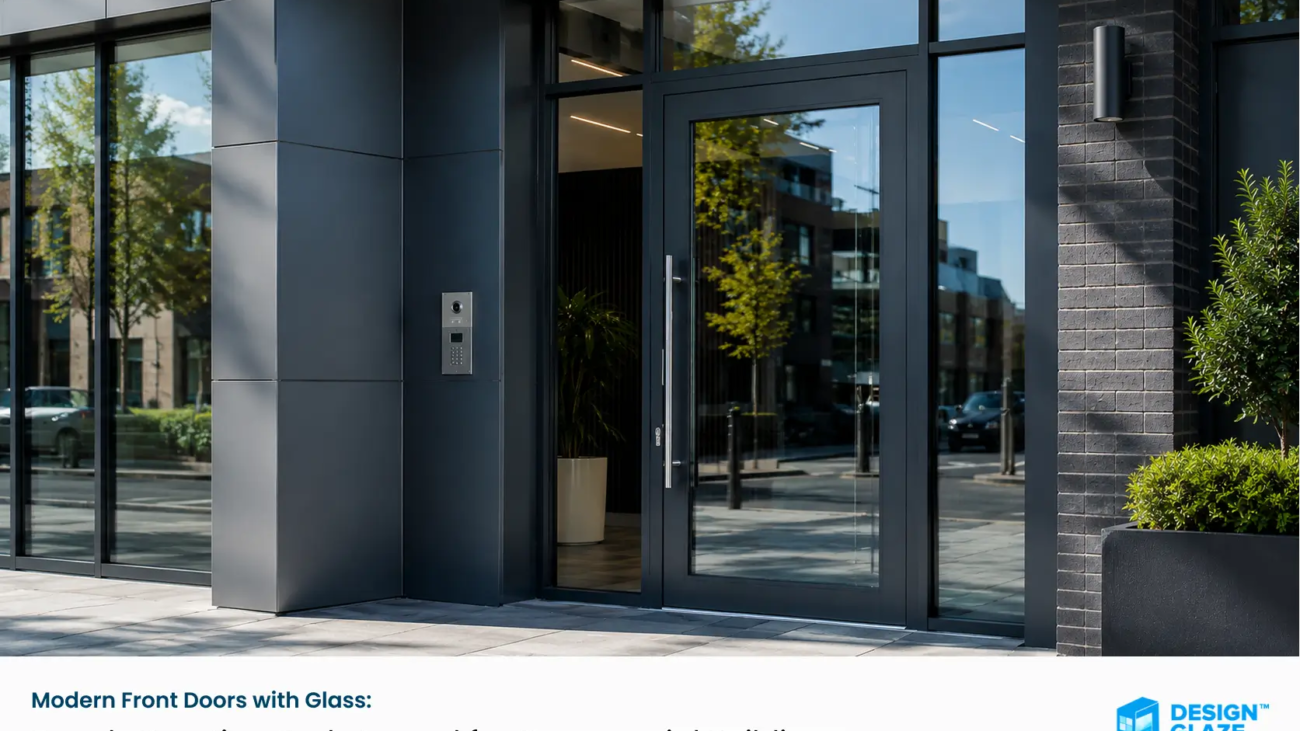
Modern Front Doors with Glass: Trends Boosting Curb Appeal for Commercial Buildings
First impressions happen at the door, and in 2026, that door is increasingly made of glass. Modern front doors with glass have moved from a design nicety to a genuine competitive advantage for commercial buildings, whether that’s an office reception, a retail unit, or a hospitality venue trying to stand out on a busy UK high street.
This guide looks at the trends currently shaping commercial front door design, why glass has become such a dominant feature, and what to think about before specifying a new entrance for your building.
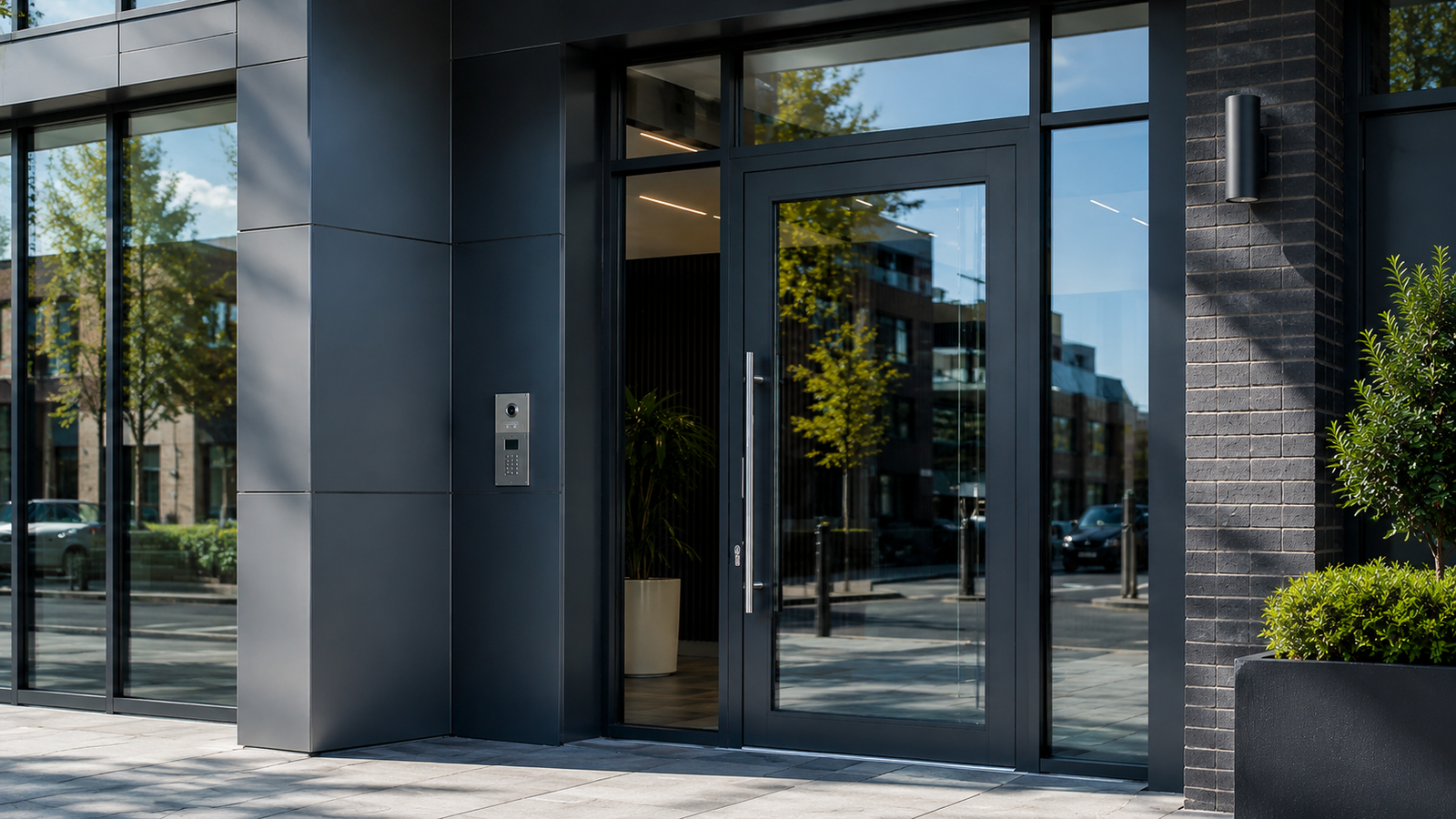
Why Glass Has Become the Default for Commercial Entrances
For decades, a solid, imposing front door signalled security and permanence. That thinking has shifted. Businesses now use glazed entrances to project transparency, accessibility, and confidence, three qualities that matter to both customers walking past and staff arriving each morning.
A few forces are driving the shift specifically in 2026:
- Natural light expectations. Occupiers increasingly expect daylight to reach reception areas and ground-floor spaces, not just upper floors, which has pushed glazing further into entrance design.
- Sustainability pressure. Businesses are under growing pressure to demonstrate energy-conscious choices, and modern glazed doors now deliver far better thermal performance than the glazing of even ten years ago, closing the gap between “looks good” and “performs well”.
- Personalisation. Just as homeowners are moving away from generic front doors toward bespoke colours and decorative glazing, commercial occupiers are doing the same with entrances, using glass detailing to reinforce brand identity rather than defaulting to a plain frame.
- Indoor-outdoor connection. The trend toward blending indoor and outdoor space, well established in hospitality and retail design, is increasingly reaching office and mixed-use developments too.
Trends Shaping Glazed Commercial Entrances in 2026
1. Bold, Branded Colour Frames
Anthracite grey remains the dominant frame colour for modern commercial glazing, prized for its sleek look and low-maintenance finish that hides marks well against high footfall. Increasingly, businesses are pairing anthracite or graphite frames with a bolder accent colour on the door furniture or surround to reinforce brand identity at street level.
2. Decorative and Textured Glass
Plain flat glazing is giving way to subtle decorative and etched glass patterns, offering privacy or visual interest without sacrificing light. For commercial entrances where full transparency isn’t appropriate, obscure or frosted glazing provides a practical middle ground, particularly for ground-floor offices overlooked by neighbouring buildings or busy pavements.
3. Slimline, Large-Format Glazing
The push for larger glass panels with slimmer surrounding frames continues, driven by both aesthetic preference and improvements in structural glazing technology. For commercial buildings, this means an entrance can carry more visual weight through glass alone, rather than relying on a heavy, solid door to convey permanence.
4. Graphite and Brushed Metal Hardware
Hardware finishes are shifting away from high-shine chrome toward graphite and brushed steel, finishes that read as more contemporary and hold up better against daily handling on a commercial door. This detailing matters more than it might seem, since door furniture is one of the first things a visitor physically touches.
5. Warmer, More Welcoming Palettes
While anthracite and grey tones still dominate, warmer neutral tones are gaining ground as businesses look for entrances that feel welcoming rather than purely corporate, particularly in hospitality, healthcare, and retail settings where approachability matters as much as professionalism.
Benefits of Modern Glass Front Doors for Commercial Buildings
- Stronger first impressions. A glazed entrance signals a modern, confident business before a visitor even steps inside, which has a measurable effect on footfall for retail and hospitality premises.
- Better daylight in reception areas. Glass entrances let daylight reach further into ground-floor spaces, reducing dependence on artificial lighting during working hours.
- Improved thermal performance. Modern glazing systems now achieve U-values that rival solid doors, meaning businesses no longer have to trade energy efficiency for a glazed, open look.
- Brand expression at street level. Frame colour, glazing pattern, and hardware finish give businesses a genuine opportunity to express brand identity at the one point every visitor and passer-by sees.
- Security without compromise. Toughened and laminated glass, paired with multi-point locking, means a glazed entrance no longer has to be a security trade-off compared with a solid door.
What to Consider Before Specifying a Glazed Commercial Entrance
Security Certification
For any commercial entrance, PAS 24 certification and multi-point locking should be non-negotiable. Toughened or laminated glass adds a further layer of resistance against forced entry, which matters most for ground-floor premises closed overnight.
Thermal Performance
Under Part L of the Building Regulations, commercial entrance doors generally need to achieve a U-value of 1.4 W/m²K or lower. Modern aluminium and composite framed glass doors can meet or beat this figure, but it’s worth confirming the specific rating before committing to a design.
Footfall and Durability
A commercial entrance is opened far more often than a domestic front door. Hardware and hinge specification should reflect realistic daily use, since a design chosen purely for looks can wear out quickly under constant footfall.
Accessibility
Entrance width, threshold height, and door weight all affect accessibility compliance. A striking glazed design still needs to work for wheelchair users, pushchairs, and deliveries, so this should be factored in at the design stage rather than retrofitted later.
Maintenance and Cleaning
Glass shows marks more readily than a solid panel door, particularly at a busy street-level entrance. Framing in anthracite or graphite tones helps disguise everyday wear, but a realistic cleaning routine should be part of the specification conversation from the start.
A Practical Example
A Wolverhampton office building refreshing its ground-floor reception replaced a heavy, dated timber-effect entrance with a slimline aluminium and glass door in anthracite grey, paired with brushed steel hardware and a decorative etched glass panel for privacy at desk height. The result was a brighter reception that no longer relied on artificial lighting during the day, a noticeably more modern first impression for visiting clients, and no compromise on security thanks to PAS 24 certified glazing and multi-point locking. The same principle applies just as well to a retail unit or hospitality venue looking to update its street presence without a full shopfront rebuild.
Frequently Asked Questions
Are glass front doors secure enough for a commercial building?
Yes, when specified correctly. PAS 24 certification, toughened or laminated glass, and multi-point locking are all standard on quality commercial glazed entrance systems.
Do glazed commercial doors lose more heat than solid doors?
Not necessarily. Modern glazing systems can achieve U-values that meet or beat current building regulations requirements, closing the performance gap with solid doors.
What frame colour works best for a commercial entrance?
Anthracite grey remains the most popular choice for its sleek, low-maintenance appearance, though warmer neutral tones are increasingly used where a business wants a more welcoming, approachable feel.
Final Thoughts
Modern front doors with glass have become one of the clearest ways for a commercial building to signal that it’s current, well maintained, and worth walking into. The trends for 2026, bolder branded colours, decorative glazing, slimline frames, and updated hardware finishes, all point the same direction: glass is no longer a compromise on security or performance, just a smarter way to make a first impression.
Design Glaze supplies and installs modern glass front doors for commercial clients across Wolverhampton and neighbouring cities, with over 5 years of experience helping businesses update their street presence without disrupting daily operations. Get in touch for a site assessment and a no-obligation quote.