
Garage Door Installation for Warehouses and Commercial Units: A Buyer’s Guide
Garage door installation for a warehouse or commercial unit is a different job entirely to fitting a domestic up-and-over door. The openings are larger, the doors are opened far more often, and security, insulation, and fire compliance all carry more weight when the space behind the door holds stock, machinery, or an entire operation. This guide walks through the main door types available for warehouses and commercial units, what they cost in 2026, and what to check before choosing an installer.
Why Commercial Garage Door Installation Needs a Different Approach
A domestic garage door typically opens a handful of times a day. A warehouse or commercial unit door might open dozens of times for deliveries, staff access, or vehicle movement, which changes what a business actually needs from the door:
- Higher-cycle hardware. Doors built for domestic use aren’t designed for the constant opening and closing a busy loading bay demands.
- Larger, non-standard openings. Warehouses and industrial units often need bespoke sizing well beyond standard domestic dimensions.
- Insulation and climate control. Temperature-sensitive stock, whether that’s food, pharmaceuticals, or electronics, often requires insulated doors to maintain consistent internal conditions.
- Fire compliance. Larger commercial and industrial buildings frequently need fire-rated shutters as part of a compartmentation strategy, which isn’t a consideration for most domestic garages.
Types of Doors for Warehouses and Commercial Units
Roller Shutter Doors
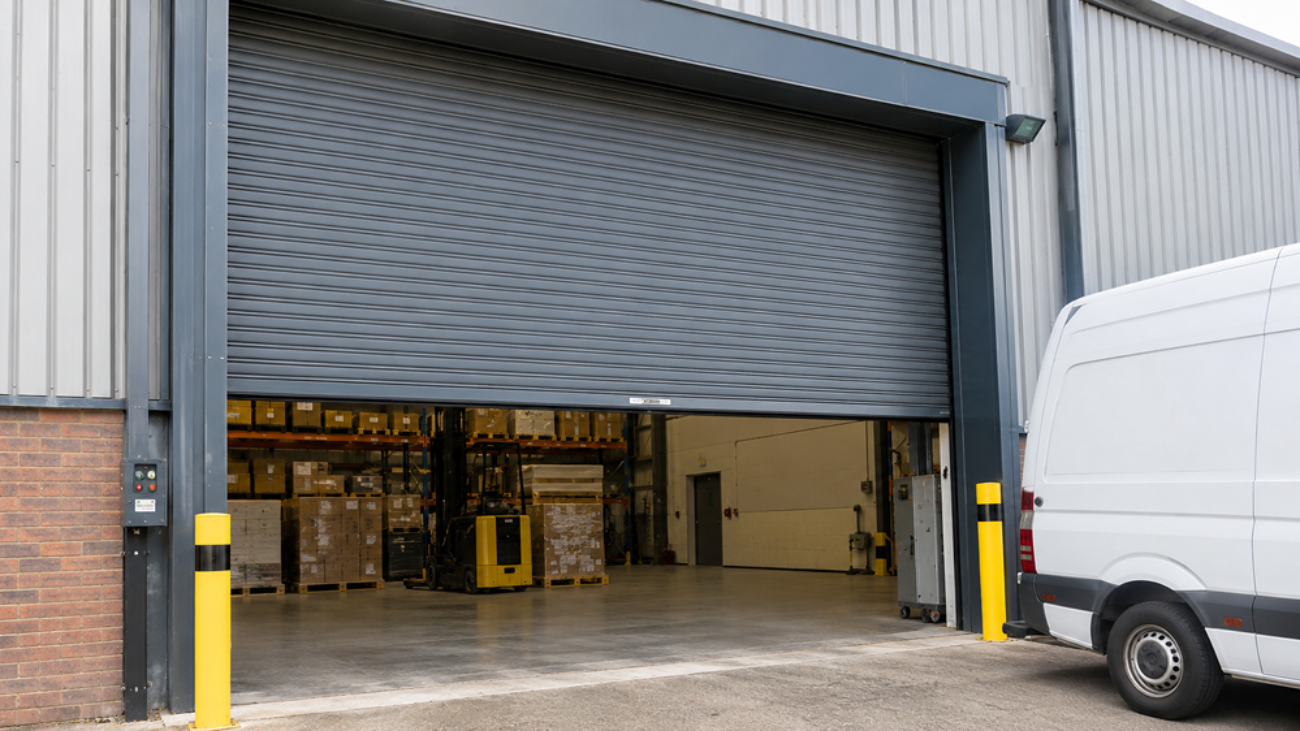
Roller shutter doors remain one of the most popular choices for warehouses and logistics units, rolling vertically into a compact housing above the opening. Built from interlocked steel slats, they offer strong security and can handle high-frequency daily use without the wear a lighter-duty door would suffer.
Best for: Loading bays, distribution centres, and any opening needing frequent access alongside solid security.
Sectional Overhead Doors
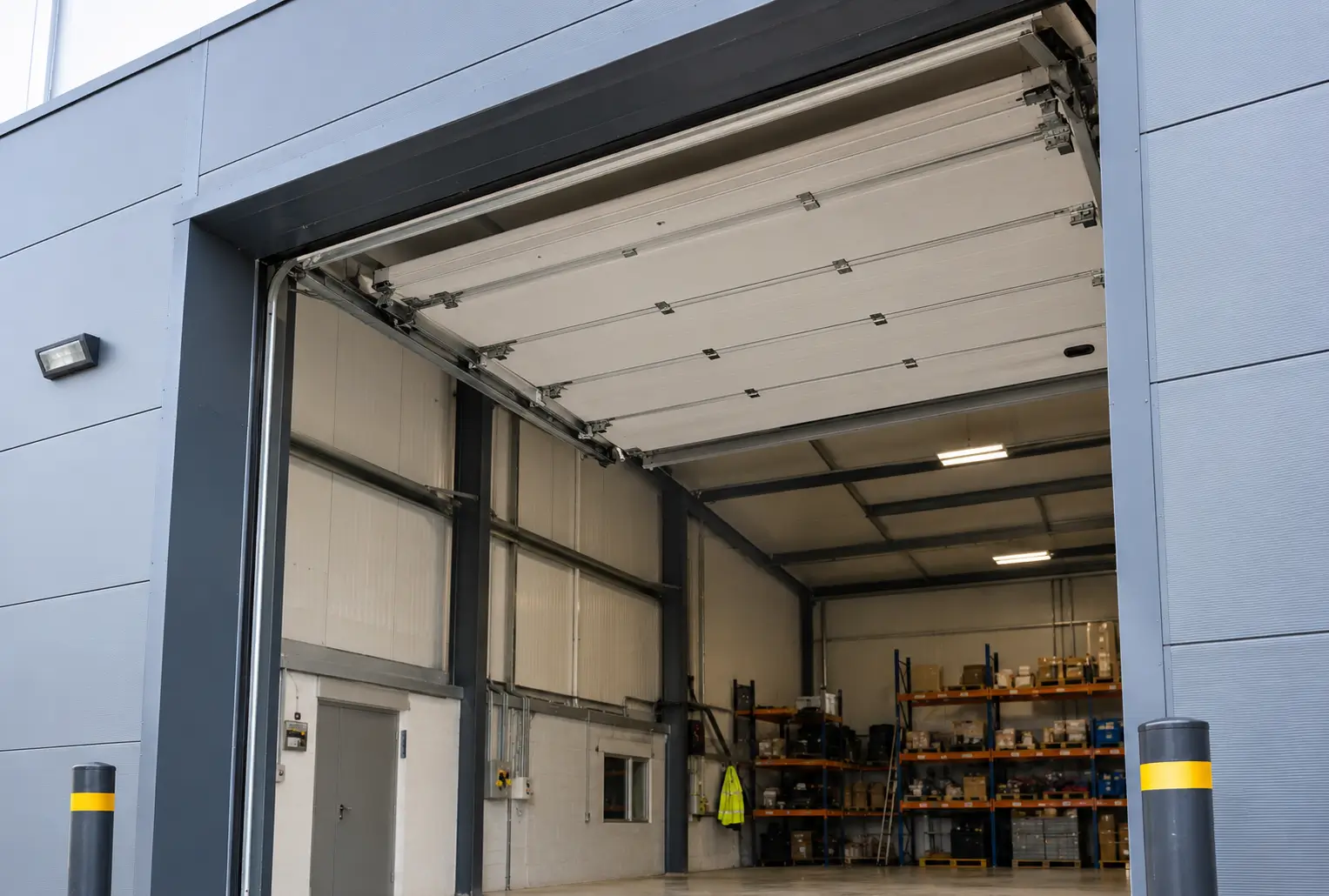
Sectional doors open in horizontal panels that lift vertically and stack under the ceiling, maximising usable floor and wall space compared with a swinging or sliding alternative. They typically offer the best insulation of the standard commercial door types, making them a strong choice where thermal performance matters.
Best for: Insulated storage, temperature-sensitive units, and premises where floor space around the opening is limited.
Roller Shutters with a Wicket Door
A wicket door is a small pedestrian access point built directly into a larger roller shutter, allowing staff to pass through without opening the full shutter for every entry. This improves both security and energy efficiency by reducing how often the main opening is used for foot traffic alone.
Best for: Warehouses and commercial units where staff need frequent pedestrian access separate from vehicle or delivery access.
Fire-Rated Shutters
For larger commercial and industrial buildings, fire-rated shutters form part of a building’s fire compartmentation strategy, automatically closing to contain fire and smoke spread between sections of a building. Specification is typically tested against BS 8524-1, the recognised UK standard for fire and smoke curtain compliance.
Best for: Large warehouses, multi-unit industrial sites, and any building where fire compartmentation is a Building Regulations requirement.
High-Speed Doors
Designed for openings that need to cycle rapidly throughout the day, high-speed doors suit environments with constant vehicle or forklift movement, reducing heat loss and improving workflow efficiency compared with a standard-speed roller shutter.
Best for: High-throughput logistics operations and internal openings between temperature-controlled zones.
What Garage Door Installation Costs for Warehouses and Commercial Units (2026)
| Door Type | Typical Cost Range (Supplied & Fitted) | Notes |
|---|---|---|
| Commercial roller shutter (light-duty) | From around £500 | Suits lighter-use commercial applications |
| Galvanised steel industrial roller shutter | £2,500 to £6,000+ | Scales with size, automation, and insulation |
| Sectional overhead door (4m x 4m opening) | From around £2,735 | Best insulation of the standard options |
| Roller shutter with wicket door | £1,500 to £5,000 | Custom or insulated options cost more |
| Fire-rated shutter | Priced per project | Depends on fire rating, size, and BS 8524-1 compliance requirements |
A few points worth factoring into a warehouse or commercial unit budget:
- Automation adds cost but pays back in daily use. Electric operation is standard on most commercial roller and sectional doors, and the labour saved on high-frequency openings usually justifies the upfront cost.
- Size drives price more than almost anything else. Bespoke, non-standard openings, common in warehouses, cost more than a standard-sized commercial unit door.
- Insulation is not optional for temperature-sensitive stock. Cold storage and climate-controlled units should budget for insulated doors from the outset rather than retrofitting later.
- Annual servicing is expected, not optional. Industrial doors are typically recommended for servicing at least once a year to maintain safety and warranty compliance under regular commercial use.
What to Check Before Choosing an Installer
Confirm the Door Is Rated for Commercial Cycle Frequency
Ask specifically how many opening cycles the door and its hardware are rated for. A door specified for occasional domestic use will fail quickly under warehouse-level daily traffic.
Check Fire Compliance Requirements Early
If your building needs fire compartmentation, this affects which doors are suitable from the outset. Confirm BS 8524-1 compliance requirements with your installer before finalising a specification, since retrofitting fire-rated shutters later is far more disruptive than planning for them upfront.
Ask About Insulation Values
For temperature-sensitive premises, ask for the specific insulation rating of the door, not just a general claim that it’s “insulated.” This matters for energy costs and for maintaining consistent conditions for stock.
Prioritise an Experienced Commercial Installer
Warehouse and commercial garage door installation involves larger openings, heavier doors, and often structural coordination that a domestic-focused installer may not be set up to handle. Look for an installer with a track record on commercial and industrial projects specifically.
Plan for Minimal Operational Disruption
For an active warehouse or distribution unit, installation needs to be sequenced around live operations. Ask how the installer plans to manage access during the work, particularly if the opening being replaced is in daily use for deliveries.
A Practical Example
A distribution unit in the Wolverhampton area replacing an ageing manual roller shutter opted for an insulated electric roller shutter with a wicket door, allowing staff pedestrian access without opening the full shutter for every arrival. The upgrade delivered three practical results: faster daily operation thanks to electric automation replacing manual winding, reduced heat loss through the loading bay thanks to insulated slats, and improved day-to-day security, since staff no longer needed to open the full shutter simply to walk in and out during a shift.
Frequently Asked Questions
How long does garage door installation take for a warehouse or commercial unit? It depends heavily on size and complexity. A standard commercial roller shutter can often be installed within a day, while larger, bespoke, or fire-rated systems typically take longer and may require a phased installation around operational hours.
Do warehouses need fire-rated garage doors? Not always, but larger buildings often require fire-rated shutters as part of their fire compartmentation strategy under Building Regulations. It’s worth confirming this requirement with a building control advisor early in the planning process.
What’s the difference between a roller shutter and a sectional door for commercial use? Roller shutters roll into a compact housing above the opening and are widely used for security and high-frequency access, while sectional doors lift in panels and generally offer better insulation, making them a stronger choice for temperature-sensitive storage.
Final Thoughts
Garage door installation for a warehouse or commercial unit needs to be planned around how the opening will actually be used, not just its size. Cycle frequency, insulation, and fire compliance all shape which door type makes sense, and getting the specification right from the start avoids a costly retrofit further down the line.
Design Glaze supplies and installs garage doors for warehouses and commercial units across Wolverhampton and neighbouring cities, with over 5 years of experience matching door specification to how a business actually operates. Get in touch for a site assessment and a no-obligation quote.