
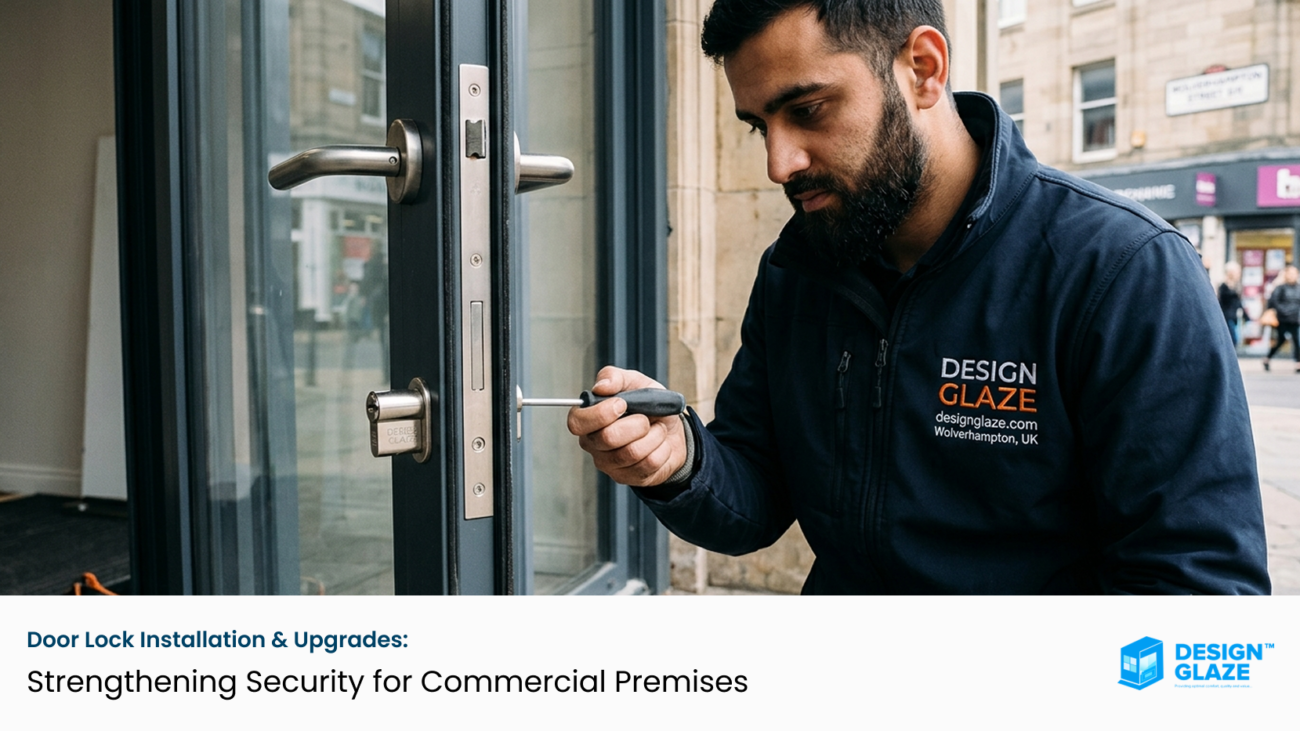
Door Lock Installation & Upgrades: Strengthening Security for Commercial Premises
Around 8% of UK business premises experience burglary or an attempted burglary each year, and ground-floor doors remain the most common point of entry. For most commercial properties, the door lock is doing more heavy lifting than any other single piece of security equipment on site, yet it’s often the last thing to get upgraded. This guide covers what modern door lock installation looks like for commercial premises in 2026, which standards actually matter, and what to prioritise if you’re planning an upgrade.
Why Door Lock Installation Deserves More Attention Than It Gets
Alarms, CCTV, and lighting tend to dominate the security conversation, but they’re all reactive, alerting someone to a problem that’s already underway. A strong lock is the first line of defence, preventing an intruder from getting in at all and making every other security measure far more effective as a result. When locks are worn, outdated, or poorly installed, even a high-specification door becomes a genuine vulnerability.
Modern break-ins rarely resemble anything dramatic. Most are quick, opportunistic, and focused on exploiting whatever weak point is easiest to find, which is exactly why outdated hardware, particularly locks fitted more than a decade ago, is such a common target. Techniques like snapping, drilling, and lock manipulation are well understood by opportunistic offenders, and older cylinders simply weren’t built to resist them.
Standards to Know Before Any Door Lock Installation
BS3621
BS3621 is the British Standard for thief-resistant locks and is frequently required by insurers as a minimum condition for commercial cover. Locks certified to this standard are tested against common attack methods including drilling, picking, and forced entry, and failing to meet it can put an insurance claim at risk following a break-in.
TS007 3-Star Rated Cylinders
The TS007 kitemark rates euro cylinder locks on a star system, with 3-star cylinders offering the strongest protection against snapping, one of the most common modern attack methods on standard door locks. A 1-star cylinder paired with 2-star hardware achieves the same overall rating, but a genuine 3-star cylinder is generally the simplest, most reliable upgrade for commercial premises.
Sold Secure and Secured by Design
Sold Secure testing (Bronze, Silver, Gold, and Diamond) independently verifies lock performance against forced entry, while Secured by Design is a police-backed accreditation scheme recognising products that meet a higher security standard. Both are useful reference points when comparing locking hardware for a commercial installation.
PAS 24 for the Full Doorset
While the standards above relate to the lock itself, PAS 24 certifies the performance of the complete doorset, door, frame, and locking system together, which matters because a strong lock fitted into a weak door or frame still leaves a genuine vulnerability.
What Modern Door Lock Installation Involves
1. Assessing the Existing Setup
A proper door lock installation starts with assessing what’s already fitted, the age and type of cylinder, the condition of the door and frame, and whether the current hardware meets current insurance requirements. This step alone often reveals vulnerabilities a business wasn’t aware of.
2. Specifying the Right Locking System
For most commercial entrances, a multi-point locking system paired with a TS007 3-star rated cylinder offers a strong, proportionate level of security. Higher-risk premises, those holding cash, high-value stock, or sensitive equipment, may warrant additional measures such as LPS 1175 rated hardware or access control integration.
3. Fitting and Testing
Installation includes fitting the new cylinder or locking mechanism, checking alignment with the strike plate and frame, and testing every locking point to confirm smooth operation. Poor alignment is a common cause of premature lock failure, so this step matters as much as the hardware itself.
4. Documentation for Insurance and Compliance
For commercial premises, keeping documentation of the certification and installation date is worth doing from the outset, since insurers frequently ask for evidence that locks meet the required standard at the time of any claim.
Signs Your Commercial Premises Needs a Lock Upgrade
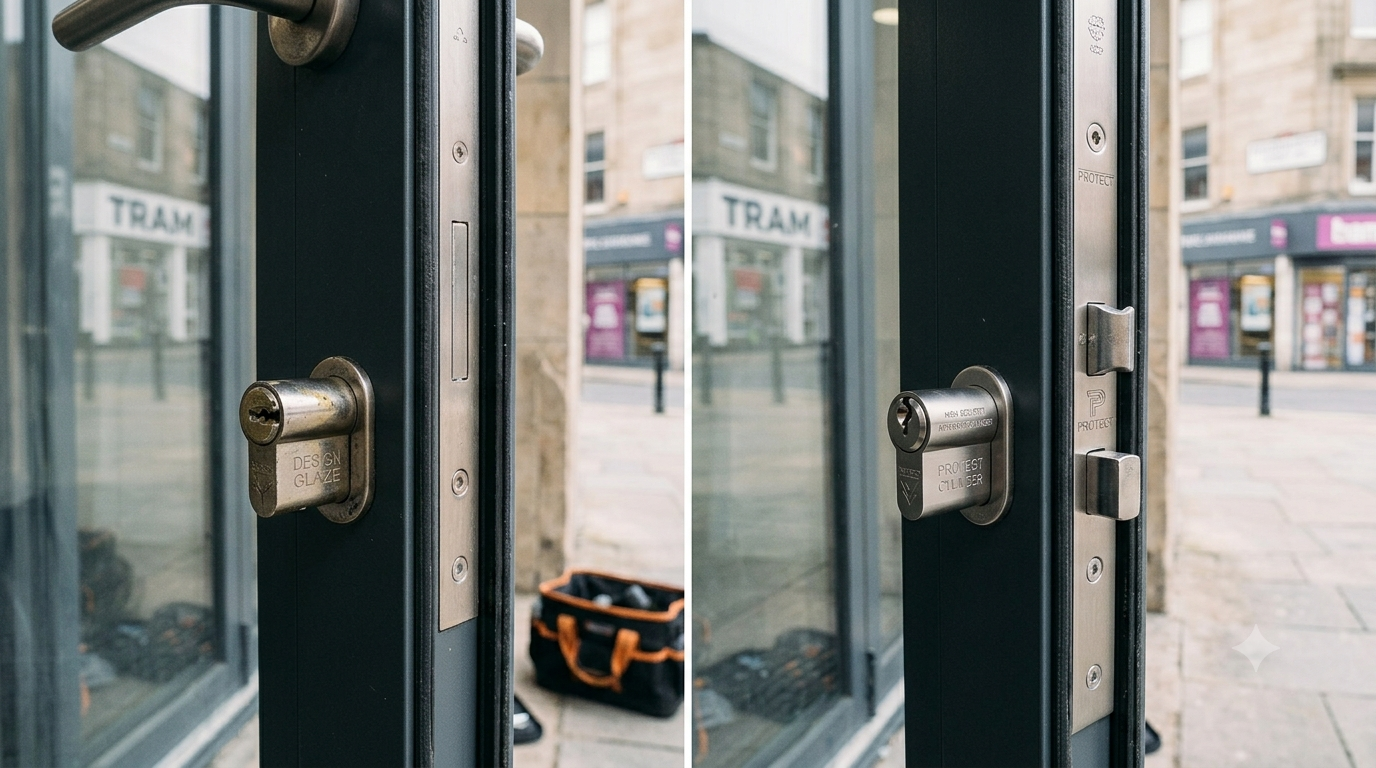
- The locks are more than 10 years old. Older hardware often predates current attack methods and may no longer meet insurance requirements.
- You don’t know the certification of your current locks. If nobody on site can confirm whether the locks meet BS3621 or TS007 3-star, that’s worth checking before it becomes a problem.
- Keys have been lost or staff turnover has been high. Every lost key or departing employee is a potential access point that hasn’t been closed off.
- The premises has been targeted before. Odds of a repeat break-in rise noticeably if security wasn’t meaningfully upgraded after a previous incident.
- You’re renewing insurance or a lease. Both are common trigger points where lock specification gets checked, making it a sensible time to upgrade proactively rather than reactively.
Choosing Between Standard and Access-Controlled Locking
| Factor | Standard Mechanical Locks | Access Control Systems |
|---|---|---|
| Best for | Small to medium commercial premises | Multi-user or high-footfall sites |
| Upfront cost | Lower | Higher |
| Key management | Physical keys, harder to track | Fob, code, or app-based, easy to audit |
| Lost key risk | Requires rekeying or lock change | Simply deactivate the credential |
| Integration | Standalone | Can integrate with alarms and CCTV |
For many commercial premises, a well-specified mechanical lock is entirely sufficient. Access control becomes more worthwhile once a site has multiple staff, frequent turnover, or several access points to manage centrally.
A Practical Example
A retail unit in the Wolverhampton area, previously fitted with a standard euro cylinder lock more than a decade old, upgraded to a TS007 3-star rated multi-point locking system following a routine insurance review that flagged the existing hardware as non-compliant. Beyond satisfying the insurer’s requirements, the upgrade closed a genuine vulnerability that had gone unnoticed for years, giving the business a documented, certified locking specification it could point to with confidence at the next renewal.
Frequently Asked Questions
How often should commercial door locks be upgraded? There’s no fixed rule, but locks older than 10 years, or those without confirmed certification, are worth reviewing. Insurance renewal and lease changes are also natural checkpoints to reassess lock specification.
Is a TS007 3-star cylinder enough for a commercial premises? For most standard commercial entrances, yes. Higher-risk premises holding cash or high-value stock may warrant additional measures such as LPS 1175 rated hardware or access control.
Does door lock installation affect building insurance? It can. Many commercial insurance policies specify a minimum lock standard, commonly BS3621 or an equivalent, and failing to meet it can affect a claim following a break-in.
Final Thoughts
Door lock installation is one of the most cost-effective security upgrades a commercial premises can make, closing off the single most common point of entry for opportunistic break-ins. Whether it’s a straightforward cylinder upgrade or a full multi-point locking and access control specification, matching the hardware to the actual risk level is what makes the investment worthwhile.
Design Glaze carries out door lock installation and security upgrades for commercial clients across Wolverhampton and neighbouring cities, with over 5 years of experience matching security specification to real business risk. Get in touch for a site assessment and a no-obligation quote.